
The Cancer Researcher
  • Home
  • About
  • The Cancer Researcher Podcast
  • #KeepResearchCurious
No Result
View All Result
  • Home
  • About
  • The Cancer Researcher Podcast
  • #KeepResearchCurious
No Result
View All Result
The Cancer Researcher
No Result
View All Result

The long road to animal studies

February 1, 2019
The long road to animal studies
by Lydia Dyck

Animal work is a big part of cancer research. Many researchers are using animal models to figure out how cancer develops and how to cure it. But before doing any kind of animal work, you have to get through the approval marathon. The wild west days of lab work are over, and now ethics committees and national authorities need to evaluate and approve any experiments to be performed on animals (I would like to take this opportunity to thank the EU for the new directive 👍).

Let me talk you through the current application process.

At first, you have to write down every single animal experiment you want to do in the next 5 years. Super easy! Which scientist does not know 5 years in advance which exact experiments will be done, right? The secret is to keep your protocols vague enough to be able to adapt to new research questions.

Once you’ve done that, your protocols have to be approved by the university’s ethics committee. They’re the people who care about animals (and statistics for some reason). You will have to answer multiple rounds of important questions related to animal welfare, for example why you don’t want to give painkillers to a mouse before feeding it a fatty diet. Or why you need to do more than one experiment to answer all your research questions (although I wish I could). Once they’re happy, you’ve managed the second big hurdle.

The next and final hurdle:The national authorities responsible for EU implementation.

Sounds scary, I know! These are the people who really care about animals but never actually worked with them. They ask even more important questions, for example which lubricant you are planning to use when measuring the temperature of a mouse by rectal probing (our answer was Vaseline by the way). On average, you get your licence after 6 months and you can finally start curing cancer! But wait a minute… only until you realise that you want to change your protocols (panic!) and you have to start all over again with an amendment application (repeat hurdles 1 to 3).

What do you want?
Every time I get an email from the national authorities responsible for EU implementation.

So, all this writing about animal welfare made me think about the other animal involved in animal work – the researcher. Why don’t we apply the three principles of working with animals – the 3Rs –  to the application process?

My suggestion would be:

  • Reduction – reduce the time to approve applications.
  • Replacement – replace ambiguous criticism with clear praise.
  • Refinement – minimise suffering and improve researcher welfare.

Now that’s what I would call a humane application procedure!


Lydia DyckAbout the author

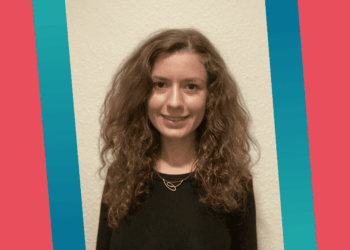
Lydia Dyck is a postdoctoral researcher at Trinity College Dublin. She is currently investigating the effects of obesity on immune cell function and the efficacy of cancer immunotherapy. She has been an EACR member since 2016.

Contact: Email | Linkedin | Researchgate | Twitter


About this article

This is one of our shortlisted entries for The Cancer Researcher-EACR Science Communication Prize. Click to read the winner and the rest of our amazing shortlist.

About this article

This is one of our shortlisted entries for The Cancer Researcher-EACR Science Communication Prize. Click to read the winner and the rest of our amazing shortlist.
Tags: The Cancer Researcher-EACR Science Communication Prize

Related Posts

“Instrumental during my PhD journey”: Àlex Cebrià Xart’s EACR Travel Fellowship

“Instrumental during my PhD journey”: Àlex Cebrià Xart’s EACR Travel Fellowship

January 30, 2026

Àlex Cebrià Xart is a PhD student at the Institute for Research in Biomedicine (IRB) Barcelona, Spain who received an EACR Travel Fellowship to visit and...

“An opportunity to learn new techniques and approaches”: Cristóbal Fernández Santiago’s EACR Travel Fellowship

“An opportunity to learn new techniques and approaches”: Cristóbal Fernández Santiago’s EACR Travel Fellowship

January 30, 2026

Cristóbal Fernández Santiago is a PhD student at the Instituto de Investigación Sanitaria de Santiago de Compostela, Spain who received an EACR Travel Fellowship to visit...

EACR Travel Grant winners at Cancer Neuroscience 2025

EACR Travel Grant winners at Cancer Neuroscience 2025

January 30, 2026

We met in Bilbao, Spain for the EACR Conference: Cancer Neuroscience between 14 and 16 October 2025. The first EACR conference on this exciting and rapidly...

The Cancer Researcher EACR logo

About Us

The Cancer Researcher is an online magazine for the cancer research community from the European Association for Cancer Research.

The EACR, a registered charity, is a global community for those working and studying in cancer research. Our mission is “The advancement of cancer research for the public benefit: from basic research to prevention, treatment and care.”

RECENT POSTS

Amel Aziba receives EACR-Molecular Oncology Editorial Fellowship
News

Amel Aziba receives EACR-Molecular Oncology Editorial Fellowship

February 2, 2026
“Instrumental during my PhD journey”: Àlex Cebrià Xart’s EACR Travel Fellowship
Community

“Instrumental during my PhD journey”: Àlex Cebrià Xart’s EACR Travel Fellowship

January 30, 2026
The Cancer Researcher

© 2025 EACR

Navigate site

  • About
  • Privacy
  • Main EACR website

Follow us

No Result
View All Result
  • Home
  • About
  • The Cancer Researcher Podcast
  • #KeepResearchCurious

© 2025 EACR