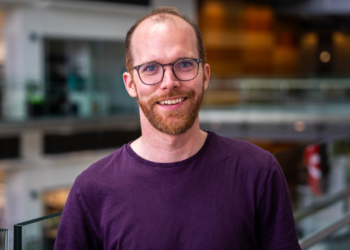


What you eat – specifically the type of fat – might matter for how well your immune system can fight cancer under conditions of obesity. In this episode of The Cancer Researcher Podcast, we discuss the impact of high-fat diets in general, and particularly of butter-based diets, on tumour growth in obese mice. Dr Hannah Prendeville and Dr Britta Kunkemoeller, two key researchers behind this work, discuss the key mechanisms they uncovered that involve weakened immune systems’ “killer” cells.
The work discussed in this episode is ‘The source of dietary fat influences anti-tumour immunity in obese mice’ published in Nature Metabolism and featured in the EACR’s recent Highlights in Cancer Research.
Our guests in this episode:
- Hannah Prendeville, Postdoctoral Researcher at the University of Galway, Ireland
- Britta Kunkemoeller, Research Fellow at Joslin Diabetes Center, US
Listen here, scroll down for the transcript and subscribe now via Spotify, Apple Podcasts, Amazon Music/Audible, Deezer or YouTube so you’ll never miss an episode. You can find all episodes and their transcripts here.
Our host is Dr. Alexandra Boitor, EACR Scientific Manager.
Episode transcript
Alexandra: Thank you for joining us on The Cancer Researcher Podcast to discuss the results of your study. First of all, what directed your attention to the study of nutrition in cancer progression?
Britta: So one of the things that made us look at nutrition is first, it’s really well known now that obesity contributes to the development of 13 types of cancer. So it increases risk for cancers like breast cancer, lung cancer, and colorectal cancer. There’s also data dating back all the way to the 1930s that the type of fat in the diet actually can influence and increase cancer growth. That was kind of the background.
The other thing is that in most studies of obesity and cancer, researchers like us use a high-fat diet, so a 45% to 60% calorie diet, but the fat in that diet comes from lard. And we were wondering, do different diets with different fats, instead of lard, have the same impact on cancer risk? That led us to changing diet and looking at how it impacts cancer and obesity.
Alexandra: So, my understanding is that this paper builds on previous studies in the Lynch lab, published in Nature Immunology and Journal of Experimental Medicine in 2018 and 2022 respectively, that look at the obesity impact in tumour progression, particularly changes to the immune system. There are several systemic changes associated with obesity that have been shown to promote tumour progression. For instance, hyperinsulinemia, hyperglycemia, hyperlipidemia, or chronic inflammation. What determined you to focus on the fat consumption in particular?
Hannah: So, one of the main themes of the Lynch lab is immuno-metabolism, so investigating how immune and metabolic systems interact. And we had previously seen that dietary fat from the lard source disrupts metabolism in NK cells and CD8 T cells, and this impairs their infiltration into the tumour and then their function within the tumour microenvironment.
So we want to expand on these studies and understand if these impairments were also caused by other compositions of dietary fat.
Britta: The other thing I would add is that there have been multiple studies by other labs that show changes in the fat composition of the tumour microenvironment, change CD8 T cell function as well. So we thought that with the dietary fat changing, that might change the composition of the fats in the tumour microenvironment and in turn influence the T cell and NK cell function.
Alexandra: So what would you say is the element of novelty that your paper brings?
Britta: So I think the real novel thing about our paper is that we’re varying the dietary fat using these novel diets that we designed ourselves, in collaboration with the supplier, to look at how that composition changes in the context of obesity.
There’s been previous work in another lab in Boston, Matthew Vander Heiden’s lab. They showed that the ketogenic diet can change tumour growth, and demonstrated that when the ketogenic diet is based on palm oil, it inhibits tumour growth while, when it’s based on lard, it promotes tumour growth. So we basically are using that variation of diet composition in the context of obesity specifically.
Alexandra: Before we move into discussing the results of your study, I would like to clarify something. Is obesity a prerequisite in this context? Would a butter based diet promote tumour progression in any individual or only in the context of obesity?
Hannah: Yeah, so we have done some experiments where mice were fed a high-fat diet for just one week. We didn’t actually see any differences in the growth of B16 tumours between any of the diets after this short amount of time. So this does suggest that long-term high-fat diet feeding and likely the obesity that then develops is necessary for the dietary fat source to impact tumour growth.
However, some metabolic changes do occur soon after dietary intervention when the mice are still lean. So for example, we see increased accumulation of sterile carnitine in mice that are fed butter for just one week. And these metabolic changes could begin to impact immune functions in smaller ways.
Alexandra: Okay, so let’s quickly run through the main results of your study to bring our listeners up to speed in case they didn’t get the chance to read the paper yet. First of all, how did the high-fat diet impact tumour progression? What were the first signs that you noticed?
Britta: So consistent with previous work in our group, we saw that the lard-based high-fat diet, that’s the most commonly used fat source in high-fat diets, accelerated the growth of a B16 melanoma tumour, compared to lean mice on a standard fat diet. And this is consistent with work in our group and others.
But we also saw that the tumour growth changed depending on the source of dietary fat. For example, we saw that a high-fat diet based on butter, accelerated tumour growth, even a little bit more than in the lard diet, but tumours in mice that were fed a high-fat diet based on palm oil grew to a similar rate as the standard-fat diet. So they weren’t accelerated at all.
And this was really interesting to us because these mice were equally obese, the ones on a high-fat diet with butter or lard compared to a high-fat diet from palm oil. So it shows that the dietary fat is having some effect beyond just causing obesity.
Alexandra: What was the difference between mice that were fed on animal fat-based diet and those fed plant fat-based diet, beyond the rate of tumour growth? Did you notice any functional changes? Did you notice any effects on the immune system or the microenvironment?
Hannah: Yeah, so I think first, just to reiterate the similarities. We found that mice that were fed butter or palm oil high-fat diets, they gain significant weight and they had a similar level of systemic metabolic dysfunction in that they were both glucose intolerant, insulin intolerant, and they relied primarily on lipid metabolism.
And as Britta was saying, despite these equal levels of obesity and metabolic dysfunction, we did see that the tumours grew rapidly in mice fed butter, but not a palm oil high-fat diet. So we then looked at the immune cells within the tumour and we saw that a butter high-fat diet significantly reduced the number of CD8 T cells and NK cells in the tumour, but not when mice were fed palm oil. There was significantly more NK cells in those tumours compared to the butter tumours.
We also saw reduced function in that there was reduced interferon gamma production by both intratumoural NK and CD8 T cells when mice were fed butter as compared to the standard-fat diet and a high-fat diet from palm oil.
Alexandra: The paper describes distinct mechanisms by which the dietary fats affect NK cells via lipid accumulation, metabolic paralysis, sustained cMyc activation, versus the way they affect CD8 T cells via acylcarnitines. Do you think there is crosstalk or interdependence between NK and CD8 T cell dysfunction in this context?
Hannah: So we didn’t examine crosstalk between the NK and CD8 T cells directly in this study, but I think there are parallel and shared but distinct mechanisms of dysfunction in this model of diet-induced obesity. For example, we saw NK cells from mice fed a butter high-fat diet accumulate lipids, and they are metabolically paralysed.
But CD8 T cells don’t accumulate lipids. Instead, we found that sterile carnitine accumulates in the plasma of mice fed butter, and this metabolite impairs CD8 T cell metabolism and function. However, we also found that these long-chain acylcarnitines had no effect on NK cells. So together this suggests that the metabolic dysfunction in each cell type may be governed by different classes of lipids, but impairments in cytokine production from each cell type may negatively impact other immune cells within their surroundings.
Alexandra: So, we keep talking about this high-fat animal-based diet and plant-based diet, but I think it’s important to define what did the mice’s diet exactly consist of, and especially how does it compare to the Western diet.
Britta: Right, so in our study, the mice were fed something called a 45% high-fat diet, and this just means that 45% of the energy, so 45% of the calories, of the diet come from fat. In the study between all the high-fat diets, they were isocaloric, so they had the same number of calories, and they contained identical base ingredients.
So the carbohydrates, the proteins, the vitamin and mineral content of the diets was the same. The only thing that varied was the fat. You know, between butter and palm oil, butter has more saturated fatty acids. Particularly myristic acid and stearic acid, while the palm oil diet had more unsaturated fatty acids, but the caloric content was the same.
The high-fat diet we used and the Western diet that is also used in mice are both types of very energy dense diets. So they provide a larger number of calories for a small volume of food and that’s how the mice end up gaining more weight than they otherwise would. So there are a lot of different formulations of something called a Western diet for research purposes that are actually 40% fat and they have more carbohydrate, than the diet we used.
That western diet is a little bit more consistent with like the typical American diet, which tends to be 35% fat, calories from fat, 50% from carbs, and 15% from protein. So our diet was a little bit different from the typical Western European or American diet, but still a, good model of a high energy dense diet.
Alexandra: Given that human diets are mixtures of multiple fat sources rather than pure butter or palm oil based fats, how do you envision these findings translating to human dietary interventions? What mixtures or proportions of fats would you prioritize for follow-up human or clinical studies?
Hannah: So this is a really important question. The high-fat diets that we use in this study were derived from single fat sources. They don’t really reflect the diversity of the human diet, therefore we can’t draw any definitive conclusions about how changes in human consumption of particular fat, such as palm oil will impact immune function or tumour growth.
But in saying that, this study was very important to establish and demonstrate that not all dietary fats affect the immune system in the same way. But there is some work from Matthew Vander Heiden’s group that showed that a diet rich in plant-based fats was associated with longer survival time in patients with pancreatic cancer.
And there is a lot of epidemiological evidence showing that plant-based diets are associated with reduced cancer risk. So taking all this together, modifying dietary fat may be a promising and affordable strategy to improve cancer outcomes in the future. However, it is unlikely that a single dietary composition may be recommended for a treatment or prevention of cancer, but dietary intervention may be considered as more of a complimentary approach alongside traditional cancer therapies.
But for human or clinical studies, we would likely prioritize comparing a diet with more plant-based fats to the typical Western diet or eating pattern of patients.
Alexandra: Have you looked at how fast the immuno metabolic effects of different dietary fat sources emerge and whether switching the diet, for instance from butter-based to palm oil-based, can reverse or rescue impaired anti-tumour immunity.
Britta: As Hannah mentioned earlier, we have done some experiments where the mice are fed a high-fat diet for only one week. And at this early time point, we already started to see the accumulation of sterile carnitine in the plasma of mice fed butter, but we didn’t see changes in tumour growth. So that suggests that the long-term feeding is required for some of these effects to build up.
But we haven’t examined the effects of switching the diet from butter to palm oil in mice that are already obese, which would kind of be the situation you’re describing. But we do have some evidence that suggests that immune cells would adapt to a new diet. We’ve looked at changing from a lard high-fat diet in obese mice, back to a standard fat diet. And we see that this change results in a significant weight loss and a reversal of some of the metabolic dysfunction in the immune system. So the NK cells are no longer full of lipids in this situation, and the levels of sterile carnitine in the plasma go down significantly.
This does suggest that changing the diet can maybe direct or redirect systemic and cellular metabolism, but whether that would occur without weight loss remains to be seen. So I think it’s very important for us to test diet switching in an obese mouse.
Alexandra: How much could these results be generalised? Would they apply to different types of cancer?
Hannah: In this study, we examined the effects of dietary fat on six different cancer models, so two melanoma models and four adenocarcinoma models. We saw that the tumours grew rapidly in B16 melanoma, easier in E0771 breast adenocarcinoma and LGSP lung adenocarcinoma models, when mice were fed a butter high-fat diet, but not when mice were fed palm oil.
But we actually didn’t see any differences in tumour growth between the diets in the YUMM 1.7 melanoma, PanO2 adenocarcinoma or MC38 adenocarcinoma models. So this would suggest that the impact of dietary fat is tumour type dependent, but currently we don’t understand why this is.
We didn’t see differences in say melanoma versus adenocarcinoma, so it’s not likely due to be cell type of origin dependent. We also don’t fully understand what features of a tumour will predict sensitivity to a diet. Things that might impact sensitivity are the immunogenicity of the tumour, so how well it elicits an immune response. And differences in how different tumour cells and other cells within the tumour marker environment metabolise fatty acids.
So this then could change the levels of different long-chain acylcarnitine species, such as sterile carnitine, which we have seen impact immune cell function. So there is still a lot of preclinical work that needs to be done to understand these differences between the tumours and to be able to predict what cancers would benefit from dietary intervention.
Alexandra: Based on your results, do you envision combining dietary fat source manipulation with conventional immunotherapies, like for instance checkpoint blockade adoptive T-cell therapy in obese hosts.
Britta: We do think it’s possible that dietary intervention would be a complimentary approach alongside that type of immunotherapy. We definitely would need to perform additional research to determine which patient cohorts would benefit the most and how to best implement the interventions within the existing treatments.
We know different cancers have distinct metabolic dependencies and preferred energy sources, so we would probably also have to consider the specific tumour type and how the tumours behave. We have actually published a study a few years ago, I think that 2022 study, where we examined the responsiveness to immunotherapy in mice fed a high-fat diet from lard.
And somewhat surprisingly, we found that the anti PD1 therapy led to a complete tumour eradication and restored CD8 T cell function and metabolism in both lean and these obese, high-fat diet from lard, fed mice. However, we haven’t examined yet if there are differences in the response to immunotherapy in the mice fed high-fat diets from different sources. So whether we’d have an even better response or faster response in the palm oil based high-fat diet, and I think that would be important work to pursue.
Alexandra: As with any good research question, it seems that your study raised a series of new questions, new challenges, in the process of answering your initial curiosity. What are the next steps or future directions to be pursued in this study?
Hannah: Yeah, as Britta just mentioned, it will be interesting to examine if there are differences in the response to immunotherapy in mice fed different high-fat diets from different sources. This in particular might reveal specific dietary components or metabolites that can maximise benefits of immunotherapy.
Something else would be to uncover how palm oil offers immuno metabolic protection in this context. So why this diet promotes cMyc activity in NK cells, for example, but a butter high-fat diet does not. Why butter and lard high-fat diets cause accumulation of long-chain acylcarnitines. Is this solely due to differences in the dietary fat or due to a metabolic impairment that we have not yet detected.
Alexandra: Slightly switching gears in our conversation, Hannah, I understand that the research presented in this paper is based on the work you did during your PhD. Would you mind giving us a bit of insight into your current research?
Hannah: Yeah. So I am now working as a postdoc in Dr. Eimear Dolan’s lab in biomedical engineering in the University of Galway. I’m currently working on a project where we are delivering immunotherapy to the abdomen of ovarian cancer-bearing mice using an implanted therapeutic reservoir. So there are clinical trials that have shown that delivering therapy to the abdomen of patients with ovarian cancer using an implanted catheter significantly improves their survival.
But there are a multitude of complications associated with this approach, including fibrosis around the implant, and this results in pain and poor quality of life. So Eimear’s lab has developed an implantable reservoir that uses a mechanical impulse, which we can then reduce the fibrosis around the implant.
So in my project, I’m combining this mechanical implantable system with immunotherapy to hopefully overcome the shortcomings in the treatment of ovarian cancer.
Alexandra: Thank you Hannah, that sounds fascinating. Britta similarly, the work presented in this paper was research that you’ve done during your postdoc. What projects are you currently working on?
Britta: So now I’m working at Joslin Diabetes Center with Dr. Ron Kahn, who’s a leader in the field of insulin signaling and insulin resistance. And I’m working on a project that’s a bit unique in the lab because I’m looking at immune metabolic crosstalk. So taking my work from the Lynch lab and applying it to a slightly different context. A lot of people don’t realize the liver is considered an immune organ, so it has a lot of immune functions, both in sensing pathogens and changes in the diet, as well as producing many of the molecules required for the immune response.
I’m looking at how changes in the liver, during type 2 diabetes and insulin resistance, can then influence its immune function and its interaction with the immune system. A really cool aspect of my project is that I’m working with induced pluripotent stem cells from human donors. So these donors either have type 2 diabetes, or a subclinical insulin resistance, so they don’t have diabetes, but they do exhibit insulin resistance or, you know, healthy normal controls.
And those IPSCs can be differentiated into hepatocytes. And what’s pretty amazing is the hepatocytes actually maintain a bunch of the features of insulin resistance, even in the dish. So that basically gives a type 2 diabetes model in a dish that I can use to probe how the liver, and the changes in the liver that happen in diabetes, influence its interactions with the immune system and response to inflammatory stimuli. So, you know, I’m continuing this immune metabolic crosstalk in this current work.
Alexandra: This has been a fabulous conversation. Both of you are continuing to work on very interesting projects, which I hope to get the chance to learn more about in the future. So Hannah and Britta, it was great meeting you and finding out more about your research, past and present. Thank you for sharing your results and research interests with us.
Hannah: Thank you.
Britta: Thank you so much for having us.
Enjoyed it? Stay curious with The Cancer Researcher Podcast. Subscribe now via Spotify, Apple Podcasts, Amazon Music/Audible, Deezer or YouTube so you’ll never miss an episode. You can find all episodes and their transcripts here.
Suggest a topic for a future episode: What would you love to learn more about? Click here to give us your topic suggestions in a short online form. We warmly welcome your ideas and input!