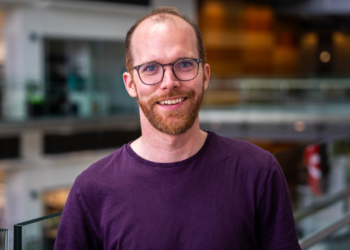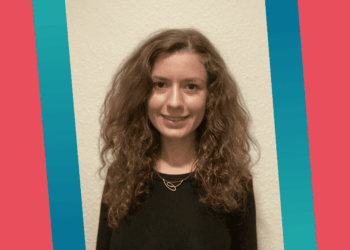


Beatrice Piotto is a PhD candidate at the Princess Máxima Center for Pediatric Oncology, Netherlands who received an EACR Travel Fellowship to visit and work at the Whitehead Institute for Biomedical Research, US between 01 June and 31 August 2025.
The EACR, with support from Worldwide Cancer Research, provides Travel Fellowships of up to €3,500 to enable early-career cancer researchers to gain new skills through a short-term visit to a lab or research group in another country.
You can read about other Travel Fellows and their experiences here.
 Name: Beatrice Piotto
Job title: PhD candidate
Home institute: Princess Máxima Center for Pediatric Oncology, Netherlands
Host institute:Whitehead Institute for Biomedical Research, US
Dates of visit: 01 June – 31 August 2025
Research: My research focuses on neuroblastoma, one of the most common tumors affecting children. Current treatments can be very demanding and are not always effective, which is why new strategies are urgently needed. I am working to identify new drug combinations that can strengthen the body’s immune system, helping it better recognize and eliminate tumor cells. By enhancing the natural defenses of the body, our goal is to make treatment more effective and ultimately improve the quality of life and survival chances for children affected by neuroblastoma.
Why did you choose the host lab?
After reading one of Dr. Weiskopf’s recent publications, which highlighted their pioneering work in cancer immunotherapy, I realised his lab would provide the ideal environment to advance my PhD project. At the same time, moving to Boston presented financial challenges given the high cost of living. The EACR travel fellowship, a well-recognised and prestigious program, provided the crucial support I needed to make this experience possible.
Can you summarise the research you did or what you learned on your visit?
My research focused on the identification of novel drug combinations to improve the efficacy of immunotherapy for patients with high-risk neuroblastoma. To achieve this, we conducted a high-throughput screening of approximately 10.000 compounds, which allowed us to identify several promising drug candidates which boosted the immune system’s ability to recognize and eliminate tumour cells. Acting together with immunotherapy, these compounds strengthen its capacity to target and suppress tumour cells. Our findings present promising opportunities for developing treatment strategies that may contribute to improving both the quality of life and survival rates for patients with high-risk neuroblastoma.
Describe a ‘typical day’ on your visit.
My typical day would usually begin around 8:30 am, arriving at the institute by public transport. Mornings were dedicated to conducting extensive experiments in the laboratory. In the afternoon, I focused on data analysis and reviewing relevant literature to support my work. Regular meetings with our PI were particularly valuable, as they allowed me to plan upcoming experiments and discuss the best strategies for advancing the project. My day would usually conclude around 7pm, after completing all my tasks.
 Did you take part in any interesting local activities?
 Did you take part in any interesting local activities?
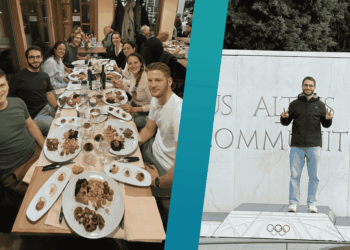
I was able to experience the 4th of July celebrations, which offered a great chance to enjoy the festive atmosphere and see how this important holiday is celebrated in the United States. I also attended baseball games at Fenway Park, which was an iconic experience and a fun way to connect with a key part of Boston’s culture. In addition, I enjoyed spending time along the Charles River and taking part in the lively events and concerts that often take place around the city.
What was a personal highlight of your trip?
A personal highlight of my trip was the chance to meet many people from different cultural backgrounds and to build new friendships alongside my scientific experience. These connections enriched my stay, offering both personal and professional perspectives that made the overall experience even more rewarding.
Did you have a personal mentor or anyone who particularly helped you?
I was guided by Kipp Weiskopf, who acted as a mentor throughout my stay. He provided valuable guidance and was always available to discuss ideas or challenges. In addition to this close mentorship, the entire research group played an important role in my experience. My colleagues were very welcoming and generous with their time, teaching me new techniques, sharing their expertise, and creating a collaborative environment that made it easier to learn and grow.
How has the trip inspired you in your research?
The trip inspired me in many ways, from the scientific exchange with colleagues to the open, collaborative spirit I encountered in the lab. Working in such a dynamic environment showed me how different perspectives and approaches can drive creativity and innovation. Beyond the technical skills, what stayed with me most was the motivation I felt from the people I met and the passion they brought to their work. This experience reminded me that stepping outside of my comfort zone and embracing new perspectives is essential for progress, and it motivated me even more to pursue my research.
Have you brought back any specific knowledge or technique that has benefited your home lab?
Definitely! Before my research stay, our group did not have the expertise to isolate, culture, and use macrophages for experiments. During my time in Boston, I learned how to generate and polarise macrophages and how to apply them in co-culture experiments. This provided me with new skills and knowledge that I was able to bring back to my home lab. These methods will not only support the continuation of follow-up experiments but can also be integrated into other projects within the group, broadening our research capabilities.
Is there anything else you’d like to mention?
I would like to sincerely thank the EACR for the support and for giving me the opportunity to carry out this experience. The support I received made it possible for me to grow both scientifically and personally, and I am very grateful for it.
Want to find out more?

If you are interested in applying for the Travel Fellowship scheme, please click here for more information: EACR Travel Fellowships