
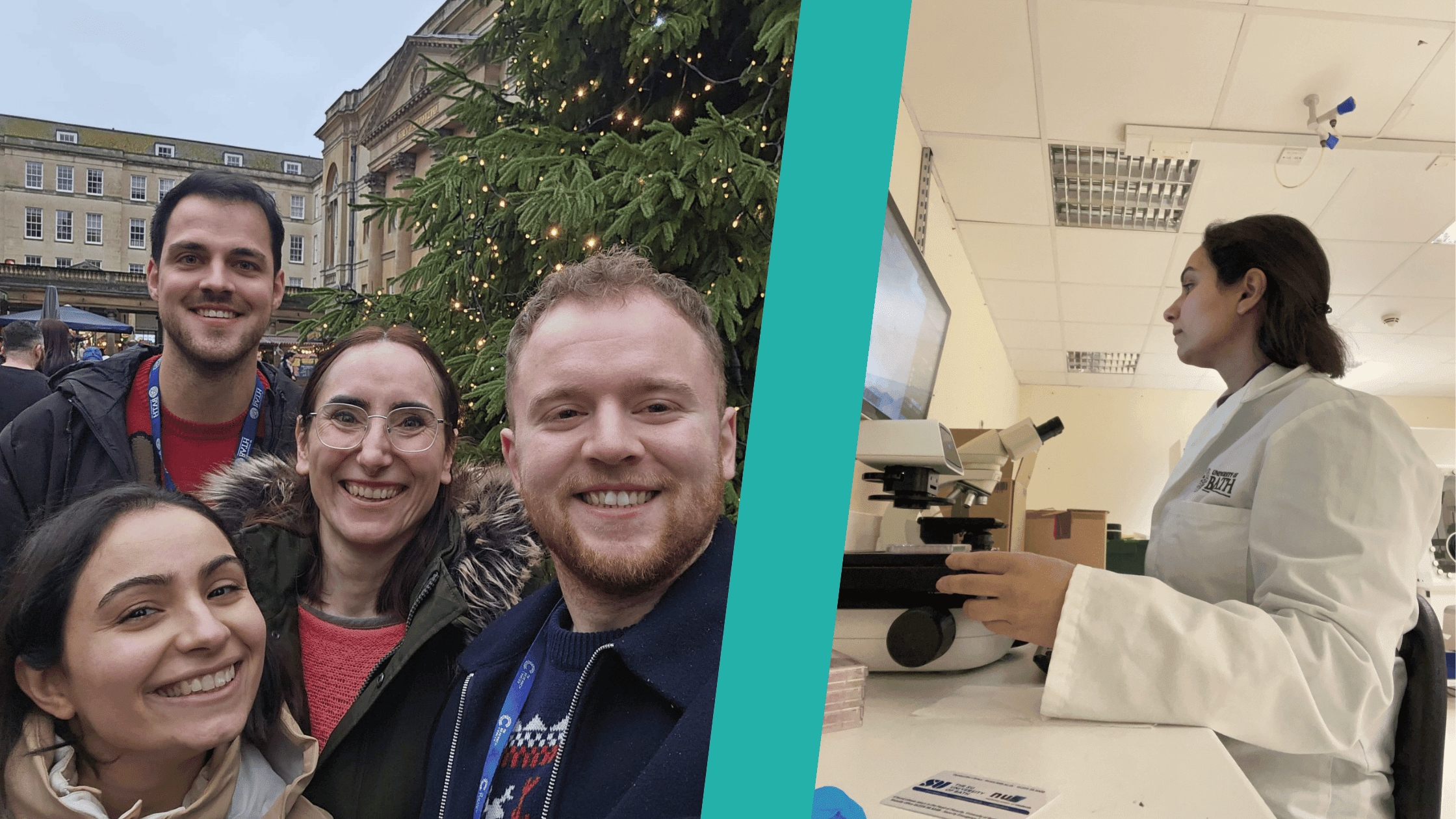
Mariacristina Franzese Canonico is a PhD student at the Università degli studi di Roma “Tor Vergata”, Rome who received an EACR Travel Fellowship to visit and work at the University of Bath, Bath (UK) between 03 November 2025 and 03 February 2026.
The EACR, with support from Worldwide Cancer Research, provides Travel Fellowships of up to €3,500 to enable early-career cancer researchers to gain new skills through a short-term visit to a lab or research group in another country. Mariacristina was also supported by the Company of Biologists.
You can read about other Travel Fellows and their experiences here.
What is the topic of your current research?
My current research focuses on bladder cancer, the most common cancer of the urinary tract. Most of these tumours remain superficial, but the muscle invasion which occurs in some cases, can be clinically difficult to treat. For this reason, there is an urgent need to find new strategies to target the muscle-invasive tumours. As lipid metabolism reprogramming is a well-known hallmark of this tumour, I’m investigating the lipid droplets dynamics in a panel of bladder cancer cell lines, reflecting bladder cancer progression, to identify lipid droplet constituents as potential therapeutic targets.
Why did you decide to apply for an EACR Travel Fellowship?
Moving to UK for three months would have been impossible for me without funding due to the high costs of living. For this reason, I decided to apply for an EACR Travel Fellowship to make this experience possible. The fellowship provided the crucial support I needed, and I would like to sincerely thank the program for supporting PhD students like us.
How did you choose the host lab?
I chose Dr. Maria Victoria Niklison Chirou’s lab as my host lab for a short research stay abroad because her group is expert in the study of lipid metabolism in cancer. I met Dr. Maria Victoria Niklison Chirou in January 2025 when she gave a talk at my home University in Rome about her work in the study of lipid metabolism in medulloblastoma. I therefore decided to ask her whether I could join her group for a short period to acquire new technical and scientific skills that would enrich my main PhD project.
Describe a ‘typical day’ on your visit.
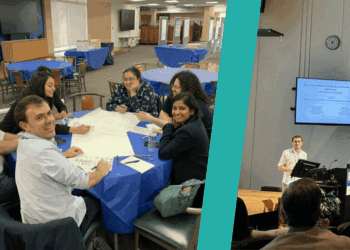
My typical day began with a pleasant walk around campus, since I lived in campus accommodation, to get to the lab at around 8:30 am. I spent the morning performing my experiments until about 4:00 p.m., after which I focused on data analysis and literature review. At least once a week I met with my supervisor to discuss my results and plan next steps. Every Friday I attended the lab meeting with Dr Maria Victoria Niklison Chirou’s group, where we presented our latest findings. My day usually ended around 6:00 pm.
What were you able to do that you could not have achieved in your home lab?
Prof Eleonora Candi’s lab, my home research group, focuses on the study of the transcription factor p63 in epithelial tissues under both physiological condition and in tumours. My PhD research investigates the role of p63 in bladder cancer, so my core skills are in gene and protein expression analysis. My time in Dr Maria Vicotria Niklison Chirou’s lab provided the opportunity to acquire new biochemical skills while working on the regulation of lipid metabolism in my cancer model. During my visit, I primarily observed the lipid droplets dynamics and the cell growth under fatty acids stimulation.
With its rich history—from the Abbey to the Roman Baths—Bath felt a little like home.
Did you take part in any interesting local or cultural activities?
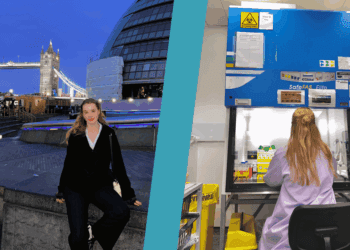
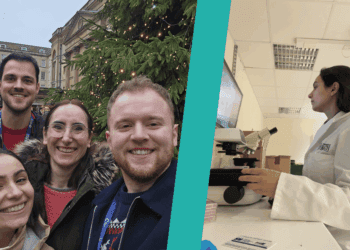
I loved Bath. It’s a beautiful British city, and I enjoyed the chance to explore it every weekend. The Christmas markets were magic, and the city is perfect for immersing yourself in Jane Austen’s world. I visited the Jane Austen Centre and other places connected to her life in Bath. With its rich history—from the Abbey to the Roman Baths—Bath felt a little like home. 🙂
Did you have a personal mentor or anyone who particularly helped you?
Dr Maria Victoria Niklison Chirou’s PhD student was a valuable point of reference throughout my stay. He provided me technical support, and I also had the opportunity to discuss my results with him regularly, which helped me scientifically. I hope we will collaborate again in the future!
Have you brought back any specific knowledge that has benefitted your home lab? Does your lab plan to do any future collaboration with the host lab?
Certainly. I brought back several techniques that will benefit my home lab. Most notably, I developed a spheroid culture model using bladder cancer cells, which I will utilise in future experiments related to my main PhD project. We are very excited to continue to collaborate given the promising results we obtained. I will continue to investigate lipid droplets dynamics in my home lab to identify potential targets for the development of new therapeutic strategies against invasive tumours. We also will continue our collaboration to exchange specialised technical skills and scientific knowledge, combining our expertise in gene expression analyses with their expertise in lipid metabolism.
How has this visit been beneficial to your research and your career?
This experience was valuable for my career because it allowed me to interact with scientists who are experts in a field different from my own. It broadened my perspective on scientific research and deepened my passion for this work. I also learned to adapt quickly to a new lab environment and to work autonomously in a short time. My visit highlighted the importance of collaboration, showing me how joint efforts can achieve far more than individual work. It was a great opportunity to practise my English, and—above all—it was my first experience working abroad, which will be fundamental for my future career decisions.
Want to find out more?

If you are interested in applying for the Travel Fellowship scheme, please click here for more information: EACR Travel Fellowships