

by Samantha Terry
I am a new-ish lecturer with a small group of just one postdoc. Together we’re studying the use of radioactivity to image and treat disease, mostly cancer. I have three years under my belt and need a holiday to properly switch off – the irony of me writing this blog on the first day of my holiday is not lost on me.
My time is spent either at work or feeling guilty about not working.
Alongside a sleeping toddler in the next room, however, the thought of two unwritten papers, three looming grant deadlines, and hundreds of unanswered emails remains on my mind. In fact, I have already broken my own rule of not checking emails on holiday.
This is because, for me, as for most in academia and research, my life in the lab doesn’t end in the lab itself. Life is the lab.
It can be tough. Mostly, my time is spent either at work or feeling guilty about not working. The main challenges with research is the constant and relentless bombardment of grant deadlines, the demand to publish papers, and need to stay five steps ahead of the rest of the scientific community. Not to mention that the work is thinking work – there are no constraints to a room or specific time. It can be carried out anytime, anywhere – which means there is no down time.
the lab and academic world gives me a special kind of family
On the other hand, the lab and academic world gives me a special kind of family, which is as dysfunctional as any traditional family: some people are easy to get on with; others are harder to love. People are privy to others’ lows, but also their highs. I think back to my own time in the lab when people witnessed my excited (and simultaneously terrible) dance moves when achieving what I saw as ground-breaking results, or finally getting a technique working after months of hard toil. Equally, people were there to cheer me up with a visit to the pub or a slice of cake when I contaminated another batch of cells or I wanted to, yet again, quit my PhD.
Since becoming a lecturer, though my own time in the lab has been much diminished, the family atmosphere persists. I now get to expand my lab family with my own PhD students (very exciting!). It was these very students that teasingly mocked me during their summer projects when I went into the lab and broke a haemocytometer – not a great start in securing my authority as group head and experienced scientist.
My advice to anyone aiming for a long-term career in science is to:
- Live life and do science to your standards and your schedule
- Surround yourself with good people to create a positive environment, and
- Try not to feel the pressure. There will always be a million things to do; your list will never be done.
My Grandma’s mantra in life has always been, “Everything will work out in the end, just not necessarily as you expected it to.”
Take science at your own pace. Enjoy the journey.
Photo description
This photo was recently taken of me at a primary school in Tottenham where I and others showcased our science. Here we were detecting using radioactivity, detectors and aprons with plush organs on the front to detect which organs were failing. This is similar to what clinicians do with patients and radioactive whole body scans.
 About the author
 About the author
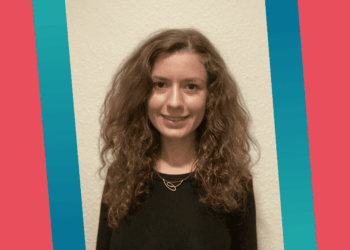
Dr Samantha Terry is Lecturer in Radiobiology at King’s College London. Her research group is currently investigating new radiotherapies, where radioactivity, attached to tumour targeting peptides, is injected into the blood stream, then homes to a tumour and irradiates it locally. She also has a research interest in using radioactivity to image the immune system to anticancer therapies.
Contact details: Email | Twitter | Website