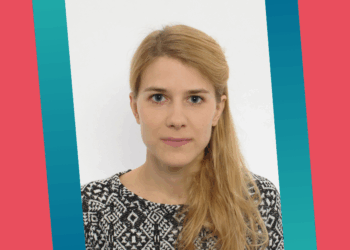


What happens when clinical care directly informs scientific discovery? This episode sees EACR award winners Charlie Swanton, Ayelet Erez and Daniel Kirschenbaum reflect on what drew them to pursuing cancer research alongside patient care, how bedside experiences guide lab investigations, and what it takes to turn a promising finding into real clinical progress. We also touch on recent breakthroughs in their work, and the biggest changes they’ve witnessed in the field.
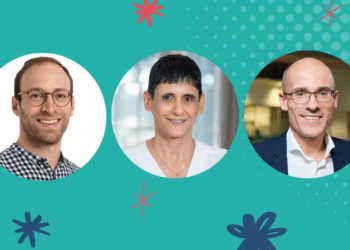
Our guests in this episode
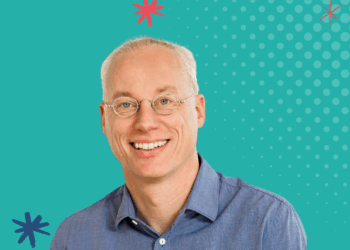
- Professor Charlie Swanton, Deputy Clinical Director of the Francis Crick Institute and Chief Clinician at Cancer Research UK, winner of the EACR-Mike Price Gold Medal Award.
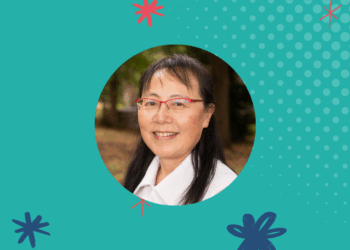
- Ayelet Erez, Professor at the Weissman Institute of Science, winner of the Pezcoller-Marina Larcher Fogazzaro-EACR Women in Cancer Research Award.
- Daniel Kirschenbaum, Neuropathologist at the University Hospital Zurich and Group Leader at the German Cancer Research Center, winner of the EACR Rising Star Award.
We would like to express a sincere thank you to the Pezcoller Foundation and the Mark Foundation for their collaboration and for their financial support towards these awards. Their commitment to recognising and nurturing excellence in cancer research has made it possible to highlight and celebrate the outstanding achievements of our awardees. This support not only honours the work of the outstanding researchers we have with us in this podcast, but also helps to encourage the next generation of scientists who will drive future discoveries. So our thanks to them for their invaluable contribution to this initiative.
Listen here, scroll down for the transcript and subscribe now via Spotify, Apple Podcasts, Amazon Music/Audible, Deezer or YouTube so you’ll never miss an episode. You can find all episodes and their transcripts here.
Our host is Dr. Alexandra Boitor, EACR Scientific Manager.
Episode transcript
Alexandra: We invited our 2026 award winners to discuss research interests and share their perspective on the evolution of the cancer research field ahead of the upcoming EACR Congress. Hello everyone and welcome to The Cancer Researcher Podcast. Thank you for accepting our invitation; it is an honor to have all of you here today.
I’d like to start by looking into what these awards mean to you. Charlie, you won the European Association for Cancer Research’s Mike Price Gold Medal Award. This award commemorates the life and work of perhaps the most significant figure in the EACR’s history, Mike Price, who served as Secretary General of the EACR for 21 years before dying in 2000, after fighting bravely for just over a year against an unusual form of cancer.
This biennial award recognizes a senior researcher who has made exceptional contributions to the progress of cancer research in Europe. And through this award, the EACR wishes to recognize your merit in advancing the cancer research field. So congratulations, Charlie.
Charlie: First of all, thank you very much.
Ayelet: Very well deserved if I might say so.
Charlie: That’s sweet of you, thank you. It’s all rather embarrassing and I really mean that because this isn’t about me. I know that sounds terribly cliched, but it’s really not. My lab members over the last 15 years have just been phenomenal. I couldn’t have asked for a better group of people to work with to be able to do what we’ve done. Their independent thoughts, their motivation, their passion for making a difference, is I guess why I’m here today. It’s really down to them and my funders – CRUK, Crick and University College London for supporting me.
It’s a great privilege to accept this on behalf of them all, and very humbling, so thank you very much indeed.
Alexandra: Thank you very much Charlie. We are very happy that you accepted the award.
Moving on to our next award, to you Ayelet, the Pezcoller-Marina Larcher Fogazzaro-EACR Women in Cancer Research Award celebrates a cancer researcher who has demonstrated academic excellence and achievements in the field of cancer research and who has, through leadership or by example, furthered the advancement of women in cancer research.
And through this award, this year the EACR wishes to recognise your merits for the cancer research community. So congratulations, Ayelet.
Ayelet: Thank you. I really appreciate the recognition of my efforts, my groups effort. It’s really very meaningful and I’m sure this recognition would also enable me to start new collaborations, new interactions. So thank you for recognizing our work.
Alexandra: Thank you for accepting the award.
Daniel, you are the 2026 winner of the Rising Star Award, congratulations. The Rising Star Award is offered by the EACR, Mark Foundation and the Pezcoller Foundation annually to an EACR member with an unfunded score ‘A’ cancer related project from the, in this case, 2025 ERC starting grant call. What does this award mean to you?
Daniel: First of all, I thank you a lot for the invitation and also for the award. It does mean a lot to me. Of course it’s great prestige, but beyond that, as you said, it’s awarded to people who proposed a bold or innovative idea, which went through the ERC process and then didn’t get funded. And of course in my early career stage, this can be discouraging and makes me think maybe the ideas we developed were not good enough or we didn’t do our homework. And then if another group of experts from the field does confirm that the idea is indeed good, that gives a lot of confidence and also the financial support really helps to start these. So I’m really grateful and I really appreciate it.
Alexandra: We also thank you for accepting the award. It’s indeed inspiring, all of you having had such an impact on your research field and workplaces, which requires passion and dedication.
Charlie, I had the opportunity to discuss with you, in episode 21 of The Cancer Researcher Podcast, how you found and defined your research interest. So before we move forward with the conversation today, I’d like to address the same question to Ayelet and Daniel. So Ayelet, what drew you into the cancer research field in the first place, and specifically to the dynamics of cellular metabolism in cancer.
Ayelet: The first thing that drew my interest was when I’m a physician, a geneticist, and there was one child with a disease caused by inborn error of metabolism. He had a germline mutation, and it’s a very severe disease in one of the enzymes, it’s called ASS1.
And I was very surprised that, knowing how devastating this deficiency is for this child, to see that cancer preferentially silences this enzyme. So, you know, what was a catastrophe for normal physiology turned out to be an advantage, a huge advantage for cancer. And I was really intrigued by it and I thought, could cancer possibly benefit from something so horrible?
And it turned out that, by signalling these enzymes, it promotes cancer proliferation, but it also highlighted to me the advantage of understanding human physiology to understand complex disorders with multiple genetic mutation, and also when something is valuable for cancer, it’s a target for therapy.
So I think this is what first drew me to this field.
Alexandra: Thank you very much and I’ll get back to something you said in your answer about being a physician scientist and how that impacted…
Ayelet: Charlie is too.
Alexandra: I know, that’s one of the reasons why I’ve got, a similar question and I think Daniel is a physician scientist as well.
Ayelet: Daniel too? Nice, all the three of us.
Charlie: Wow, that’s, pretty amazing.
Ayelet: Yeah.
Charlie: Congrats both of you.
Alexandra: So I want to ask all three of you, what dragged you to the intersection between clinical practice and cancer research. But before that, I’d like to hear from Daniel as well, what drew his interest into the dynamic behavior of immune cells in brain tumours?
Daniel: So for this was a bit serendipitous. I’m a brain pathologist and I’m still practicing. Back then, let’s say seven years ago, when I finished my PhD and my residency. Actually my PhD was in neurodegeneration and I developed microscopic techniques, so very different. And what I missed in that work was the mechanism, the molecular insight. Everything was a bit too static.
Around the same time, a good friend of mine got cancer and also I see glioblastomas and different types of brain cancer in my everyday practice. So, I decided that I would move more into this field and I got in touch with Ido Amit in the Weissman and we were discussing what are the missing building blocks to understand what happens to immune cells in cancer, for example. This is how we came up with the idea to look into this more.
Alexandra: And as mentioned earlier, I couldn’t help but notice, as Ayelet also pointed out, that all three of you are physician scientists. So I was also interested in learning how did you decide to work at the intersection between clinical practice and cancer research?
Charlie: It’s an interesting question. I think one of the fascinations about biology for me is, we all like to study how and why things work, and one of the best ways of doing that is to start with a system that doesn’t work. And I think that the beauty about integrating a career in medicine and molecular biology and discovery research is, you know, you are faced constantly in your daily practice with a system, body, that doesn’t work. And of course, that system is a patient and, that patient experience is real suffering. And so there’s a practical consequence, as well as satisfying one’s curiosity. And the two combined are immensely powerful.
It’s the hope that one day something you’re doing might contribute, at least in a minor way, to alleviate suffering. Plus this sort of infinite fascination of the human body and how it works and what happens when it doesn’t work properly.
I know that sounds a little bit contrite, but I think the fact is cancer, as Ayelet and others have shown, is a systemic disease. Understanding cancer as a systemic disease is a massive challenge and Ayelet and many others have really contributed to that understanding.
That’s an area that physician scientists are sort of uniquely placed to adopt. It’s that understanding of the body functioning as a homeostatic system, and trying to figure out how human disease impacts homeostasis and the functioning of normal organ systems and how it perturbs normal organ function, potentially for its own benefit.
Ayelet: I also think that it helps you deal with frustration because, as a clinician, if you can’t really help because the drugs are limited and you don’t understand something, you go to research and you try to answer the question. And on the other hand, doing research takes so long, so it’s really helpful when you go to the clinic and you can actually help someone on a daily basis. So I think it’s really a gift to be able to do both.
Daniel: I second both, that it’s really a privilege, to work both as a scientist and as a clinician. And, for me, similarly as Charlie said, it was always a very strong intrinsic curiosity to understand how the human body works and how it’s built. That’s why I was really passionate in my medical studies. And then, once you learn what is known, and you are still curious, then that’s automatically research.
And then I went into a field which allows combining staying at the bench and then, in the same office, I can look at patient samples and submit diagnosis. So this naturally led to cancer research, looking at cancer samples.
Alexandra: And how does your experience with patients influence the scientific questions you choose to pursue.
Charlie: In my case, this all started really from my PhD, where I developed an interest in genomic maintenance, genome stability, and instability when things go wrong. Followed by my medical training when we began to see firsthand how these so-called magic bullets, targeted therapies, work transiently and tumours develop resistance. I would say to patients, this is Darwinian evolution, much like microbial resistance being acquired over time due to branched evolution.
But then, people would challenge it, you know, medics and other scientists would challenge that assumption. And, I thought when I set up my own lab, how can we explain drug resistance, or contribute to an explanation of drug resistance, beyond the sort of standard linear models of tumour evolution.
And we worked at the Marsden, with James Larkin, to tackle that question in patients with clear cell carcinoma of the kidney, using multi-region sampling and fairly crude whole exome sequencing analysis to just ask a very simple question. If you take multiple biopsies in the same tumour, do you get the same sequencing result from all six or seven biopsies or are they different? And they were different but related, in a branched sort of Darwinian manner.
About the same time, Tarek Enver and Mel Greaves published similar work in acute childhood leukemia, showing very similar observations. And I think, from then onwards, that helps at least a contribution to our understanding of sort of the genetic basis of acquired drug resistance.
Of course in retrospect it’s blindingly obvious and, in my view, not such a great advance, but sometimes it’s like that in science, it’s helpful to prove it. And it wasn’t just me, Nick Navin, Nelly Polyak, lots of others did really beautiful, elegant work demonstrating very similar things.
Of course that’s not the only way in which drug resistance occurs. We now know it’s far more complicated than that, epigenetic resistance being one of them. So the field has really blossomed and I think we got a much better understanding thanks to next generation sequencing, and other multiomic and single cell approaches of how drug resistance manifests.
But it comes down to the fact that, you know, patients suffer the consequences of drug resistance. The drugs work transiently, they get better transiently, but the disease comes back with a vengeance, weeks, months, or sometimes a year later, and we very rapidly run out of therapy.
So understanding the basis of drug resistance, tackling it and potentially forestalling it, is a critical clinical problem that is extremely important for patient care. And of course, in terms of curiosity driven science, it’s infinitely, important and interesting.
Ayelet: I can continue this on the other side of the drugs, which is the side effects. Sometimes you give one drug to fit all chemotherapy and stuff and it doesn’t. So if you can really understand the mechanism of the disease, you can actually find the drug that treats mechanistically the disease and has much more chance to succeed compared to just giving general drugs with no specificity.
Now that we’re combining the host into the cancer equation and adding all the host variables – it’s genetics, microbiome, it’s diet, it’s exercise. Every patient we can actually do personalized medicine on. So this will also eliminate some of the side effects. So I think all in all, knowing the patient’s physiology and what we call the tumour macroenvironment, actually helps diagnose cancer earlier and treat it better.
Daniel: For me it’s also a very natural step. Like if you look into a microscope and do immuno stains, then you would immediately see that most tumours and especially, let’s say glioblastoma, it’s close to 30 to 50% of the tumour mass are actually immune cells. Then a natural question is, okay like how do they get there? How does this actually immense complexity of cell states in these tumours evolve, while actually if you think about that these are circulating immune cells, which somehow end up there and create a much greater complexity than where they come from? This is an interesting question and we were looking for a method how could we untangle how this develops. And this is basically what drove the first steps of our research.
Once you know how an immune cell transitions through various states and creates the complexity that you see in a tumour, then you can also start to think, okay, how can one redirect these trajectories or block them? So this is how, for me, the everyday samples we see in the clinic, is very much intertwined with how I look at the research.
Alexandra: So now that I understand a bit more about how your clinical experience influences your research questions. If you’d allow me to go on this path with the conversation, I’d like to ask you the reverse question in a way. How do you assess whether a discovery made in the lab has true clinical potential?
Charlie: Gosh, that’s a question and a half! Really the only way to assess if a discovery in the lab has true clinical potential is to put it to a clinical test. And that clinical test can span anything to sort of retrospective analysis of clinical data through to a prospective clinical trial, depending on what you are looking at.
How does one judge if a scientific finding will have translational value is another question entirely. To some extent I think that’s a sort of judgment call. I think there are two ways of looking at this. There’s a statistically significant p-value and then there’s clinical significance.
You can have, due to very large sample sizes, a very significant p-value. But if your biomarker overall is not hugely predictive, it’s not gonna be much use in clinical setting. So, what we look out for, at least in the biomarker field, is a biomarker that’s not just statistically significant, but one that has real predictive value for groups of patients at high risk of either a lung cancer diagnosis, for example, or a future lung cancer diagnosis.
Or in the case of minimal residual disease tracking that we developed with tumour informed next generation sequencing guided to the truncal mutations in a patient’s tumour, how predictive are our minimal residual disease detection tools for predicting metastatic recurrence.
And we’ve worked hard to optimize the predictive value of these tools over the last sort of five years, such that now, in collaboration with Personalis, we’ve got a tumour-informed MRD biomarker that can get down to sensitivities as low as one part per million. And that gives us much better predictive power than the sort of first generation assays, for minimal residual disease detection after resection of the primary tumour, for prediction of who should not have adjuvant chemotherapy. So I guess that’s one example, but I’m sure Ayelet and Daniel have others.
Ayelet: I think one way to narrow it down is that we start with the clinical questions many times. We know what the patient’s problem is, we know what the question is, so we’re more focused than just an unbiased screening that you don’t know whether it’ll be relevant.
So I think that’s one way to narrow it down. But again, just like Charlie said, we try to predict. We go back to patients that we already know the diagnosis and see whether we were able to predict, retrospectively, that they will have the disease. And then you have to wait a long, long time to see whether it actually worked in real life.
Daniel: Yeah, I cannot add much to what Ayelet and Charlie said, they are much better authorities on this. So what is the clinical impact? One is to test, Absolutely. And, what’s the impact on the field? I think time can only tell how the colleagues react and how an idea is picked up.
Alexandra: You stole my next question, basically. Because now that we’ve got a bit of an insight into how you define your research field, and how you look at the research question and the transition from bench to bedside, back to bench. I wanted to ask all of you, how do you think that your work will influence the development of your own research field in the future?
Charlie: I honestly dunno the answer to that question. I can tell you how we approach scientific problems. So, we obviously have been running Tracer X and Tracer X EVO now for over a decade. And as the data mature, the data get richer and richer, and we get a deeper insight into lung cancer evolution, that we develop hypotheses from. And then we test those hypotheses in in-vitro or animal models in the lab. So we’re constantly seeking parallels across species, between the human and the mouse, to support, or to further the hypothesis, to understand the biological basis of what we’re observing in humans. And to seek similar biological signals across species. It gives us confidence that we’re looking at the right thing.
So, for example, one of the areas that benefited from that approach is looking at the consequences of air pollution on the lung. We had access to human data sets through collaborations in Vancouver with a scientist called Christopher Carlsten and our mouse air pollution data sets, and we could see common transcriptomic signals between the mouse and the human. And in the middle of this sort of melee of genes, if you like, was IL-1beta, that was cordially upregulated in both human and mouse.
Reflecting on my sort of clinical experience, I knew about a trial called CANTOS, which looked at the impact of anti IL-1beta on cardiovascular disease endpoints. It met its endpoint prevented cardiovascular events. But also in the study they showed that it reduced the number of new lung cancer diagnoses. So when we saw IL-1beta come up in our transcriptomic signals in mouse and human, and we knew about the epidemiological evidence, which we leveraged from the literature on the association between air pollution and lung cancer, we thought we might be on the right track and that IL-1beta might be important in tumour promotion of progenitor cells carrying oncogenic mutations. And that’s sort of the way in which the work evolved. Sort of a combination of human analysis, human clinical trial data sets, in-vitro and in-vivo animal modeling, to sort of begin to put flesh on the bone, so to speak, of a scientific hypothesis.
Alexandra: Before I give Ayelet and Daniel a chance to answer this question as well, I just wanted to quickly ask if this is something that you plan to elaborate more on as part of your lecture at the Congress.
Charlie: Oh, yes, I will be definitely talking about this and its implications for lung cancer prevention. Yes.
Alexandra: Thank you. I’m looking forward to hearing more because I remembered last time we spoke, you expressed excitement about the area of research and molecular cancer prevention in general, and some hopes of potentially in the future having a way to prevent cancer that’s similar to using statins to prevent cardiovascular diseases.
Charlie: That’s right. I’m super excited about it actually. Having a way of intervening to prevent two age related pathologies, lung cancer and cardiovascular disease. and actually may have some impact in neurodegenerative disease as well.
I just think this tells us that there are common upstream nodal inflammatory pathways that regulate multiple age related pathologies, which is super interesting. And it’s sort of where, I think we had a discussion about Occam’s razor, the simplest solution is always the best. So the simplest solution to aging is that there is one, or a few, upstream causes of multiple distinct age related pathologies, and I think IL-1beta fits that mould very nicely.
Ayelet: Nice.
Alexandra: Really exciting. Looking forward to more about that at the Congress in June in Budapest.
Ayelet: Yeah, me too.
I think, we have this opportunity now because we have all these big data sets, like clinical data sets. We have the proteomic, transcriptomic, and now we have the way to integrate it all and to learn from it and to actually look at the multiple layers of the host too.
This is something that I’ll also be discussing, how chronic diseases or chronic drugs that we take, and we’re not aware of, can actually affect cancer progression or prevention. I’ll touch on statins too.
Charlie: Ayelet’s a pioneer of finding these really crucial signals in large scale electronic medical record data sets, that give surprising insights into the impact of drugs on human biology and clinical outcomes. I wonder if you’d like to talk a bit about that, ’cause it’s super cool.
Ayelet: Okay, so some of it is unpublished and…
Charlie: Oh right. Well, maybe not then. Sorry.
Ayelet: The idea is that we’re unaware of chronic drugs that we take for other indications, not cancer, how they actually influence cancer progression or prevention or restriction of metastasis. and now that we have all these data sets, we can actually combine everything in ways that we couldn’t. I think it also sets up multidisciplinary collaborations.
The bottom line is the same for everyone. We want what’s best for the patient, and now we can actually integrate it all. So yes, I’ll discuss it more in my talk. Hopefully by then I’ll hear from the editor.
Alexandra: if I may follow up with the question, does this apply only to drugs for a long period of time for chronic diseases, or would it apply to drugs that are taken for shorter periods of times, but maybe several times In life, like for instance, antibiotics. Even if it’s like a short course, you keep taking them.
Ayelet: Yeah, so that’s a very big field that studies how short term antibiotics affect your microbiome, but also the tumour microbiome. A long time ago, people treated cancer with the antibiotics. So it has some rationale behind it that we now start to understand. But I will not be discussing this. It’s completely outside my field of research.
Alexandra: So Daniel, how do you think that your work will influence the development of your research field in the future?
Daniel: You know, my career so far has been short, I would say, so it’s hard to tell, but I think what we contributed so far is conceptual, on the one hand, and technological on the other hand.
So, basically we showed that the changes immune cells undergo in cancer are very dynamic and they are very quick. So the targets we develop drugs against, some of them are very transient, or get upregulated at the stage which might not be relevant in the end for therapy because we need to intervene earlier. So I think this is a conceptual idea to look at this system as a very dynamic one.
And at the same time, we, developed the technological tools so that one can study this. And we are continuing to do that. So now we’ll combine, this manic we call it, that we can over time resolve immune states. We are planning to combine it with spatial information, with in vivo data and so on. Hopefully, although the lab is very young, we just started a year ago, maybe by June, we can show a few things already.
Alexandra: I’m looking forward to learning more about that. I’m glad we had the opportunity to learn a bit more about the research you’re currently performing in your labs and what I presume to be some of the projects that you’re more excited about at the moment, and I’m looking forward to learning even more about all these projects at the Congress in June.
On that note, I wanted to ask you if you could tell me one thing that you’re looking forward to at the EACR Congress.
Ayelet: I miss so many of my friends
Charlie: Yeah, I agree.
Ayelet: and colleagues. I’m really, really looking forward to it. And also to be inspired and meet the new ones.
Daniel: Exactly. Yeah, for me it’s going to be my first EACR Congress, so I’m very excited about it. To meet a lot of role models and leaders in the field, be inspired and excited, and also make new friends. It’s personally also interesting, a coincidence, that it will happen in Budapest, which is where I’m originally from. And actually I got a bit disconnected over the years after university and maybe I can touch base with some colleagues there. So that’s especially interesting.
Ayelet: Here you have two new friends.
Charlie: Yeah exactly.
Daniel: Great.
Alexandra: We are, we are looking forward to welcoming you to the Congress. Hopefully it’s gonna be one of many to come.
Daniel: I hope so. Thank you.
Alexandra: It’s one of the questions that I ask quite frequently on the podcast, and it’s surprising how many times the answer comes down to networking.
Charlie: Science is all about friends and networking. Networking is a bit sort of businesslike. It’s actually just a shared love of this just remarkable natural world and the curiosity that’s sort of hidden behind that. You know, mankind’s urge to get to the bottom of it.
Everybody at the conference will share that urge and that desire. It doesn’t really feel like you’re competing with anybody. I mean, people say science is a competitive business. Of course it’s competitive, but it doesn’t really seem like that when you’re at a conference like EACR. Everybody’s pulling in the same direction. Collaborations are so easy to come by, so much fun. It’s a very privileged job this.
Ayelet: It’s far beyond the science. I can tell you that I was in a shelter and Charlie emailed me – Is everything okay? Like it’s far beyond just interactions regarding some collaboration.
Alexandra: I wanted to mention earlier when Charlie said that it’s business-like in a way that I like to think, or at least to me, it feels that in science, the connection is a bit more genuine, maybe.
Charlie: Without a doubt. I think the relationships you make with other scientists are very special. You share something that you can’t share with anybody else in the world. In a way I suspect you get the same dopamine rush that you get if you’re religious, for example.
You know, I think it’s a very similar neuronal central nervous system feedback. It’s just such an exciting, brilliant field to be in with such practical and important consequences for patients. You know, everybody we will meet at EACR will share that enthusiasm and passion, and that’s how friendships are made and bonded.
Daniel: Yeah, definitely. I think also for scientists, it’s really part of their identity. To connect on this level is very important and also from the other way around. Even if there is an amazing scientist, but if as a person it doesn’t fit or it’s not a pleasant person, will never work with that person just because great papers come out from the lab.
Charlie: Yeah absolutely.
Alexandra: Moving forward with the conversation. Another question I initially wanted to ask all of you was, how did the cancer research field change since you started working in it?
Ayelet: I think science is becoming borderless. Because it’s so easy now to communicate and exchange data and exchange ideas. Even when we can’t meet, like during the COVID or other reasons, you can still do at least hypothetical science. So I think, it’s a huge advantage that was less available when I started. All these communications between disciplines, between countries, it grew exponentially the possibilities.
Alexandra: Glad to hear that, Charlie, Daniel, is there anything that you would like to add on this topic?
Charlie: I guess I’ve been in science now since 1995, on and off, and one of the biggest changes is just this explosion in very large data sets and computational power that enables us to understand them. That said, I do sometimes worry that the sort of elegant molecular approaches we used to take in the nineties, to understanding how natural systems work, have been sidelined, at the expense of these very large data sets. And I think we have to be careful to not just describe, but also understand biology.
My lab has had a tendency to do a lot of description at the expense of a functional understanding of mechanism. And, that is really the hard work. It’s understanding biology. It’s relatively straightforward to develop atlases and observe biology. it’s very much harder to understand the sort of functional mechanisms that underpin it.
In the nineties it was really very much all the latter, and not the former. And much more, the last sort of two decades at least cancer biology has swung more towards description rather than understanding of function, arguably. And I think we need to find ways of, healthy balance between the two.
And also an appreciation that the functional work we do in the lab, versus the sort of descriptive genomics work we do, is very much slower. And as a result, the postdocs and PhD students who are embarking upon trying to understand mechanisms in disease biology, cancer biology, will inevitably publish more slowly than the descriptive genomics people.
And I think we have to be cognizant of this on review committees, and really make that distinction between description and function when evaluating candidates for progression and prizes and what have you.
I think that’s really an important point and to Ayelet’s point I absolutely agree with that. I think that one of the great things about modern cancer biology is the team science approach. It’s very much encouraged by many of our funders. That makes it more fun. It means the work we do is more scalable. We can work with bigger data sets, so our conclusions are more robust. There are so many advantages to working in big teams. But that said, I still think there are advantages is having small, nimble teams too. So you need a balance, is sort of what I’m getting at.
Daniel: From my perspective, I don’t have this historical perspective on the evolution or least of course when I look at the papers, I see it, but I didn’t experience it.
Actually, what I wanted to say is that if I just look at my past six years in the field. When I started my postdoc, it was doing atlases, big single cell data sets of mouse models. Patients were still very much appreciated or immediately, I would say, publishable, and I think nowadays the field is moving to really ask, okay, what can you do with this data?
People start to design synthetic logic based on epigenetic regulators and all of these extremely cool things, which a few years ago were not really imaginable. And I think it’s a consequence of these big data sets.
So I think it goes in waves and I think we might be narrowing down a bit what we do with this data nowadays. But at the same time, I feel what Charlie was saying, that we are a bit drowning in data sometimes and it’s not clear what people wanna do with it.
Alexandra: So then in your view, drawing from the experience as a scientist and as a physician as well, what would be the biggest barriers to translating all this data that we’ve acquired or make it useful for the standard clinical care? Is it just the need for functional studies, in addition to it, or is there something else there?
Charlie: In my narrow field of prevention, the biggest barrier is there is no commercial model for cancer prevention. There’s really no successfully marketed drug for cancer prevention, or model for reimbursement. And that’s really preventing VCs, investors, pension funds, et cetera from investing in moving forward into a whole new era of molecular cancer prevention, which I think is at our fingertips, and it’s possible now, but fundamentally there is no clear first mover that wants to take the risk to develop assets in this area.
And that’s very frustrating because we’ve got the science, we understand the biology, we’ve got clinical trial data sets, the proof of principle, and yet we spend all our lives in the cancer clinic treating patients with advanced metastatic disease with a median survival of somewhere between 6 and 18 months.
In many ways the drugs that have come through the clinic in advanced metastatic disease, whilst they’ve been active and they’ve shown benefit, their benefits are relatively modest. The overall survival benefits can be measured in, weeks or short months.
My argument is prevention is better than cure and we should be really doing all we can to stop the disease from happening in the first place. But the difficulty is there’s no reimbursement structure for that in healthcare systems right now. And that sort of health economic problem is way beyond any skills I have in the lab to solve.
Ayelet: As a geneticist, I am a true believer in prevention because once the disease happens, it’s so hard to treat it and especially if it’s something with multiple drugs and side effects, it’s absolutely better to prevent it. And I think, at least in terms of genetics, we were able to show it to insurance companies and stuff that if you know that a child is going to develop cancer based on germline mutation and you follow it and you diagnose it early, actually the treatment is much more successful and the survival is much better. But this is only true for pediatric cancer, not for adult cancer.
In addition, I think the major barrier is the time it takes for translation. There’s huge gap between where science is and where we are as physicians. It takes many, many years to close for each drug.
This is a huge barrier, especially for investors that like to invest in high tech, where you answer some cyber problem and it’s immediately funded. So that’s another big obstacle.
Alexandra: I’d like to continue this conversation for a very long time, but that would be just me being selfish because I’ve got all three of you here and I’ve got this opportunity to talk to you. I am mindful of your time as well. Thank you very much, all of you for taking this time to chat with me today. I truly appreciate it and I’m sure our audience will as well. I’m looking forward to meeting all of you at the Congress in June.
Alexandra: If you’d like to have the opportunity to learn more about our awardees research and meet them in person, join us on the 08-11 June, 2026 in Budapest for the EACR Annual Congress: Innovative Cancer Science. You will get the opportunity to hear the latest from, and network with, top researchers from various fields of cancer research.
Ayelet, Charlie, Daniel, and our postdoctoral fellowship winners will be joined by the EACR Board Members and keynote speakers such as Bernhard Kuster, Eduard Batlle, Xin Lu and Caroline Dive, alongside many other esteemed researchers. This year, the EACR Congress will cover a breadth of topics from both fundamental and translational research with examples of clinical development.
Register before 21 April, and you will benefit from reduced registration rates. And as an early career researcher, you may also get the chance to join for free an early career showcase the day before the Congress. More information about the program and invited speakers can be found at 2026.EACR.org.
Enjoyed it? Stay curious with The Cancer Researcher Podcast. Subscribe now via Spotify, Apple Podcasts, Amazon Music/Audible, Deezer or YouTube so you’ll never miss an episode. You can find all episodes and their transcripts here.
Suggest a topic for a future episode: What would you love to learn more about? Click here to give us your topic suggestions in a short online form. We warmly welcome your ideas and input!