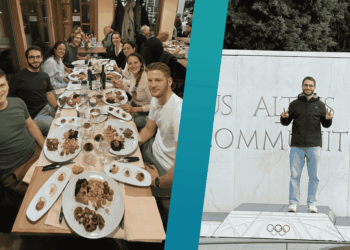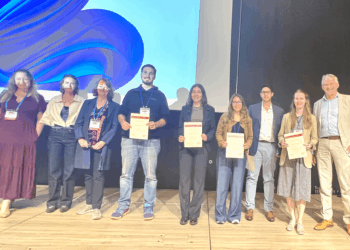


We met in Essen, Germany for Goodbye Flat Biology: ex vivo to in vivo models of cancer between 23 and 25 September 2025. This edition of the popular EACR conference sought to emphasise how targeting the mechanisms that control assembly into tissues, including the interactions with multiple epithelial cell types and the immune system, affects cancer progression and treatment response. Participants enjoyed a dynamic scientific programme covering the most recent advances in the field.
Supported by Worldwide Cancer Research, we were delighted to award several Travel Grants to help cancer researchers in need of financial assistance to attend the event.
Read on to learn about their experience of the conference.
Jakub Gubala
PhD student, University of Geneva, Switzerland

Research: In my research I focus on understanding how kidney cancer is being supported by cells called Cancer-Associated Fibroblasts. These cells have been shown in various cancers to decrease treatment response but their direct effects in kidney cancer are still unknown. By studying how CAFs interact with cancer cells using 3D lab-grown tumour models called organoids, I aim to uncover why some patients respond well to therapy while others don’t. I am trying to optimise a method, which might allow to recreate this resistance in an in vitro setting and find personalised and effective treatments that can overcome it.
What was a personal highlight of the conference for you?
My personal highlight was the ability to exchange ideas with fellow researchers specifically in my field. During many other conferences, when a topic of tumour microenvironment is discussed, majority of studies focus solely on the immune compartment. However, during EACR Goodbye Flat Biology 2025, there was a much bigger variety of topics (such as studies done with Cancer Associated Fibroblasts or endothelial cells, etc.), which often feel underrepresented. This gave me the chance to discuss new research ideas in detail with researchers who work in similar topics.
How has the conference inspired you in your research?
The Goodbye Flat Biology conference had a great amount of impactful research that was relevant to my own and my colleagues. Many of the talks, as well as posters, gave me new ideas that I have already started implementing in my research. Additionally, meetings with the sponsors/companies allowed me to discuss and solve many of the “troubles” I encountered before during my experiments.
When you got home, is there anything from the conference that you immediately wanted to tell your colleagues about?
After coming back, I was really excited to tell my colleagues about many of the innovative approaches presented during the conference. In particular, I wanted to share with my colleagues the knowledge I gained from attending the talk of Prof Chris Tape on the topic of “Single-cell Phenoscaping of Tumour Microenvironment Organoids”. It gave me a completely new perspective on how drug screening can be done using co-cultures of patient derived organoids with TME components.
Have you brought back any specific knowledge that has benefited your research?
I attended the Goodbye Flat Biology conference with the idea of discussing microfluidic systems. Talks with many of the researchers allowed me to discover potential challenges when transferring of static 3D models onto the flow setup and in addition provided solutions to some of the troubles already encountered. In this context, it allows me to proceed with the “setup” stage much faster, leading up to focusing on my main research question.
Laleh Rafiee
Senior Researcher, Istanbul Medipol University, Turkey

Research: This study introduces a microfluidic chip-based platform for efficient spheroid generation and analysis. The device uses PDMS micromolding to create agarose-based microwells that support uniform spheroid formation across multiple cell types. Its hydrogel structure ensures balanced nutrient and waste exchange, allowing for long-term culture and maintaining spheroid viability. The chip enables seamless media changes without physical spheroid transfer, minimising loss and handling time. It is fully compatible with immunostaining and fluorescence imaging. Overall, the system enhances experimental precision, scalability, and workflow efficiency in 3D culture studies.
What was a personal highlight of the conference for you?
It was my first time attending an EACR conference, and it was truly a memorable experience. Beyond the excellent scientific sessions, what stood out most to me was the warm and welcoming conference environment. I really appreciated how the organizers divided attendees into smaller groups, which encouraged conversations and helped everyone get to know each other better. Taking a group photo of all participants added a wonderful sense of community, and finally, the ceremony that honored the travel grant awardees made the event feel both inspiring and heartfelt.
How was this conference different from others you have attended?
I believe the atmosphere of the conference was truly unique, warm, engaging, and full of nice connection. The conference topics were directly related to my research field and personal interests, which made the experience even more valuable. I was particularly pleased to see that many of the participating companies were focused on 3D technologies, allowing me to learn more about organizations working in this specialised area.
How has the conference inspired you in your research?
The main takeaway for me, especially from the keynote speaker, was the importance of approaching scientific topics from multiple perspectives. This way of thinking can help me analyse complex problems more effectively and will be valuable when writing future research proposals. I also had the opportunity to meet leading scientists in my field and learn about the latest studies related to my research interests. Additionally, I gained insight into the emerging challenges currently being addressed in this area of science.
When you got home, is there anything from the conference that you immediately wanted to tell your colleagues about?
Yes, I discussed some of the scientific presentations from the conference, particularly the project by Johanna Ivaska from the University of Turku, which focused on 3D matrix-guided cues in cancer progression. Also, about other studies that show how mechanical challenges within the tumour microenvironment can significantly influence tumor cell behavior and contribute to therapy resistance. I found these topics especially fascinating, as it closely relates to my own research interests in tumour biology and 3D models.
Maitane Duarte Garcia-Escudero
PhD student, University of the Basque Country, Spain

Research: Colorectal cancer has a nearly 50% recurrence rate, driven by therapy-resistant cancer stem cells (CSCs). My research has found a promising new target to eliminate these cells: PCSK9, a key regulator of cholesterol metabolism. We discovered that knocking down PCSK9 dramatically reduces the size and stemness of aggressive, CSC-like tumours grown in 3D models. Importantly, it also sensitises them to standard chemotherapy like 5-FU. We therefore propose PCSK9 inhibition as a novel therapeutic strategy to deplete the CSC population, with the goal of preventing metastasis and recurrence in patients.
What was a personal highlight of the conference for you?
A personal highlight was undoubtedly the opportunity to connect with scientific peers at all career stages. As my first EACR conference, I was pleasantly surprised by its atmosphere. Despite featuring top-tier researchers, it felt like an intimate and familiar space where I could easily speak with anyone, from PhD students to senior investigators. Furthermore, as the only researcher in my lab working with 3D models, it was incredibly liberating to find others facing the same technical challenges. Sharing these frustrations directly enabled a collaborative problem-solving session, which was invaluable.
Did you take part in any interesting local activities in your free time outside of the conference?
Outside of the conference schedule, I took the opportunity to explore Düsseldorf. I was surprised by its identity as a former industrial city that has reinvented itself as a modern one, a history deeply connected to its river. This transformation strongly resonated with my own city of Bilbao. The parallel between these two distant places following a similar evolutionary path made me think about the essence of the conference itself. It served as a powerful reminder that, just as cities can develop shared solutions to common challenges like urban renewal, scientists from diverse backgrounds can converge on universal principles to face a global challenge like cancer.
How has the conference inspired you in your research?
The conference was a significant source of inspiration, fundamentally shaping my view of how transformative research is conducted. The large-scale projects presented in lectures highlighted the power of interdisciplinary collaboration, showing that groundbreaking results require diverse expertise. I was particularly struck by the critical involvement of engineers in developing the tools that drive our field forward. Finally, presenting my own poster and engaging in discussions was immensely enriching, providing direct feedback and new perspectives that I am now eager to integrate into my project.
Have you brought back any specific knowledge that has benefited your research?
The conference was profoundly inspiring and has given me a new direction for my research. Several lectures helped me understand that my current approach to understanding the underlying molecular mechanisms could be updated. They inspired me to modernise my focus towards understanding dynamic plasticity in my own models. This new perspective is crucial to decipher the processes of metastasis and therapy resistance.
Marahaini Musa
Lecturer and Researcher, Universiti Sains Malaysia, Malaysia

Research: My research focuses on understanding human genetics, particularly how our DNA influences health, disease, and individuality. I am especially interested in exploring genetic factors that contribute to complex conditions such as colorectal cancer. Part of my work involves using cell culture, where colorectal cancer cells are grown in the lab to study how genes behave and how the disease develops. By examining these cells and genetic variations, I aim to generate insights that could improve early detection, diagnosis, and awareness of genetic risks, while also supporting the role of genetics in education and healthcare.
What was a personal highlight of the conference for you?
I am truly delighted to have had the opportunity to listen to presentations by renowned researchers in the field of organoid and spheroid cultures. These sessions not only deepened my understanding of 3D culture systems in advancing cancer research but also highlighted the potential for innovative applications in the future. In Malaysia, the use of organoid/spheroid culture in cancer studies is still relatively limited, which makes exposure to such knowledge especially valuable. Attending this meeting has opened doors for potential collaborations with researchers from various countries, and I also gained meaningful insights into the latest technologies, methodologies, and global trends in organoid research.
How was this conference different from others you have attended?
Interestingly, one of the highlights of this conference was the Networking Quiz, which provided a wonderful opportunity for me to connect with other participants in a more relaxed and enjoyable setting. Through this session, I was able to exchange ideas, build new professional relationships, and strengthen collaborations beyond formal presentations. I also gained insights into the city of Essen, where the conference was held, and appreciated learning more about its culture and history alongside the scientific program.
Did you take part in any interesting local activities in your free time outside of the conference?
Besides attending the conference, I also had the chance to do some sightseeing at Old Town Kettwig with my friend. It is a quiet, scenic town in Essen with a unique historical charm that made the visit truly memorable. I enjoyed leisurely walks along its narrow streets, taking photos of the picturesque surroundings, and admiring the beautiful traditional German architecture. We also discovered some cozy cafés that served delicious cakes and pastries. The visit offered a wonderful balance between academic learning and cultural exploration.
When you got home, is there anything from the conference that you immediately wanted to tell your colleagues about?
Upon returning to my institution, I had the opportunity to share with my colleagues the exciting prospects of organoid culture in advancing cancer research. This innovative 3D culture system can provide deeper insights into cancer biology, enabling us to study tumour growth and drug response in ways that are closer to real human conditions. Such approaches also open possibilities for discovering more effective and personalized cancer treatments.
Have you brought back any specific knowledge that has benefited your research?
I was particularly intrigued by several talks on glycocalyx and drug repurposing in cancer that were presented during the conference. These topics sparked my interest as they highlight innovative approaches in understanding cancer biology and developing new treatments. I believe these areas hold significant potential to be explored further, especially in the context of my ongoing research in Malaysia, where such studies are still emerging. The insights gained from these presentations may inspire new directions and collaborations that could strengthen cancer research locally.
Maria-Danae Jessel
PhD student, University of Liverpool, UK

Research: I study cholangiocarcinoma, a rare but aggressive cancer of the bile ducts with very poor survival rates. Current treatments, including immunotherapy, only help a small number of patients because many of these tumours are ‘cold’: they lack the immune cells needed to fight cancer. My research uses a cutting-edge model made from thin slices of real patient tumours that can be grown outside the body, in the lab. This allows us to test ways of turning ‘cold’ tumours into ‘hot’ ones that respond better to treatment. The goal is to find new combination therapies and reduce reliance on animal experiments to improve outcomes for patients.
What was a personal highlight of the conference for you?
A personal highlight of the conference for me was the opportunity to learn about the wide range of preclinical models currently being used to study cancer. I was introduced to several innovative approaches, some of which I had never even heard of before, which made it an incredibly valuable learning experience. Another highlight was meeting so many inspiring early career researchers from around the world. Attending as a solo traveller, the networking activities and friendly atmosphere gave me the chance to step out of my comfort zone, make meaningful connections, and feel part of a supportive international community.
How was this conference different from others you have attended?
This conference was different from others I’ve attended in several ways. It was my first international conference abroad, and also the first time I attended without other members of my lab, which made it a unique personal and professional experience. Unlike previous meetings I’ve been to, which were narrowly focused on the specific cancer type I study, this conference covered a much broader range of cancer types and research areas. That breadth exposed me to new perspectives, techniques, and model systems, which was both refreshing and inspiring.
Did you take part in any interesting local activities in your free time outside of the conference?
Although I would have loved a bit more time to explore Essen, I did manage to experience some local highlights. One evening, a few fellow peers from the conference and I went to a traditional German pub, where I enjoyed an excellent Schweineschnitzel. I also took a short (and very chilly!) walk through the Grugapark, which was a nice break from being indoors. A real highlight was visiting the Museum Folkwang, one of the earliest museums in Europe to collect and exhibit modern art, where I was able to see many fantastic works by artists including Vincent van Gogh and Paul Gauguin.
How has the conference inspired you in your research?
The conference inspired me by exposing me to a broad range of innovative cancer models and approaches that I hadn’t encountered before. It also motivated me to think more creatively about experimental design and to potentially explore collaborations beyond my immediate research field.
Were there any social highlights you want to tell us about?
A highlight for me was meeting other early career researchers working on different cancer models. As a solo attendee, it was great to connect with peers who shared similar challenges and ambitions, and I really valued the sense of community.
When you got home, is there anything from the conference that you immediately wanted to tell your colleagues about?
Yes, I was excited to share some of the innovative preclinical models presented, especially those that were completely new to me and some of the novel work being done on the preclinical model we’re working with. I also shared how inspiring it was to see the range of techniques being applied across cancer research, as well as some of the creative approaches to studying the tumour microenvironment.
Have you brought back any specific knowledge that has benefited your research?
The conference gave me practical insight into different ways of using ex vivo models to study the tumour microenvironment and test therapeutic strategies. Some of the talks highlighted methods for modulating immune cell activity in model systems, which could be relevant to my own project. This knowledge has already helped me think about the continuity of my project and how we could apply certain ideas to develop the work in our group.
Is there anything else you’d like to mention?
I’d like to sincerely thank the EACR and Worldwide Cancer Research for the travel grant that made this experience possible. I’m very grateful for the chance to hear so many inspiring talks, discover new research approaches, and connect with researchers from around the world. The conference was both scientifically enriching and personally rewarding, giving me motivation and new perspectives for my own work. The welcoming atmosphere, especially for early career researchers, made it a truly memorable experience.
Sabrina Stecher
PhD STUDENT, University Hospital Wuerzburg, Germany

Research: My research explores how fat tissue influences breast cancer progression, as obesity is linked to a higher risk and poorer prognosis. Using 3D bioprinting, I create realistic models of breast cancer tissue in the lab to study how surrounding adipose cells affect cancer cell behavior. In particular, I investigate how cancer cells migrate and invade surrounding tissue to better understand key processes driving tumor progression and to guide the development of more effective treatment strategies for breast cancer.
Were there any networking highlights you want to tell us about?
I had many engaging conversations during my poster session, and one of the highlights was connecting with a researcher from Spain. We discovered a strong overlap in our work and are now planning a collaboration that will combine her spheroid printing technology with my Bioink. I’m really excited about that, as it could open up some valuable new research directions. I also really enjoyed the gala dinner, where I had the chance to speak more informally with some of the exhibitors about their career paths.
How was this conference different from others you have attended?
This conference stood out because of its really welcoming atmosphere. It was not too large, so it was perfect to engage with the participants multiple times during the conference. In general, the community was very approachable, and it was clear that early-career researchers were especially encouraged to ask questions and engage in discussions. The scientific quality was outstanding, the talks were dense with meaningful content and showcased really impressive research. Overall, it felt both intellectually stimulating and personally engaging in a way that’s not always the case at conferences. To me the flexible and professional organising team was the cherry on top and made the whole conference a great experience. I hope to be there again in two years!
What was a personal highlight of the conference for you?
One of the main highlights for me was the opportunity to learn about new cutting-edge topics, particularly the talk by Prof. Chris Tape on single-cell phenoscaping, definitely a topic I want to explore further.
Another standout moment was presenting my poster. It was incredibly rewarding to receive direct feedback and to engage in in-depth discussions about drug testing in my 3D bioprinted cancer model. The input I received was very constructive, offering fresh ideas and new directions I hadn’t considered before.
Beyond the scientific content, what made the conference really special were the honest, human conversations I had with fellow researchers. We talked about successes but also the challenges we all face in the lab, the failed experiments, the long nights, the pressure. Sharing those experiences and hearing how others navigate similar obstacles created a real sense of community. It was a great reminder that behind all the data and posters are people who are just as driven and committed to pushing boundaries as I am.
The conference left me feeling more connected, motivated, and full of new ideas to bring back to my research.
When you got home, was there anything from the conference that you immediately wanted to tell your colleagues about?
There were many exciting takeaways, but two points stood out to me the most. First, from Prof. Johanna Ivaska’s talk, the idea that “normal fat is good”, meaning that certain adipose cells can actually act as an anti-invasive barrier to cancer, was particularly striking since it challenges some common assumptions and opens up interesting avenues for further research. Second, a recurring theme throughout the conference, both in talks and informal discussions, was the essential role of computational approaches. Experiments can take us far, but to truly make sense of complex biological data and uncover insights that aren’t directly observable, we need the right computational tools. That really reinforced the importance of integrating experimental and computational methods in our work.
Yizheng Zhang
PhD student, Tübingen University Hospital, Germany

Research: My research focuses on developing advanced preclinical models to predict responses to cancer immunotherapies. Using fresh human lymphoid tissues, I have built a 3D perfusion bioreactor system that closely mimics the intact human tumour microenvironment. This model allows us to evaluate immunotherapy–TME interactions, study checkpoint inhibitors like pembrolizumab, and analyze CAR T cell activity in a physiologically relevant context. Ultimately, the goal is to improve personalised immunotherapy strategies and accelerate translational cancer research.
What was a personal highlight of the conference for you?
A personal highlight was presenting my project on “Modeling Immunotherapies in Live 3D Human Cancer Tissue Bioreactors”. It was exciting to get feedback from experts in tumour immunology and hear their perspectives on how the work could be applied in a clinical context. Several attendees showed genuine interest in the bioreactor platform, which was encouraging. I also really enjoyed the plenary talks on tissue dynamics and the role of the extracellular matrix, they gave me new ideas for thinking about tumour biology.
Were there any networking highlights you want to tell us about?
The conference was a great opportunity to meet other researchers working on organoids and ex vivo tissue models. I had several interesting conversations about potential collaborations and sharing ideas on experimental approaches. Informal chats with senior scientists during coffee breaks and poster sessions were also very valuable, giving me practical advice and a better sense of how to connect my work with broader translational research.
How has the conference inspired you in your research?
The conference highlighted how complex tumors are as ecosystems, with many interacting cell types. It reinforced why modeling this complexity in the lab is so important. Hearing about new techniques, like spatial and single-cell analyses, made me think about ways to combine them with our 3D bioreactor system to study immune-tumour interactions in more detail. Overall, it encouraged me to think more broadly about how to design experiments that reflect real tumor biology.
When you got home, is there anything from the conference that you immediately wanted to tell your colleagues about?
I shared with my colleagues how other groups are using different approaches to model the tumour microenvironment and immune interactions. It was exciting to discuss how some of these ideas could be adapted to our bioreactor system. The conference also reminded me how important it is to study tumours as a complex tissue environment rather than relying only on simple 2D cultures.
Interested in EACR Conferences and further Travel Grants?
We organise a variety of excellent cancer research conferences, both in person and virtual, where the latest research topics and interaction for participants are the very highest priorities.
To assist researchers who need financial assistance to attend our in-person conferences, we offer EACR-Worldwide Cancer Research Travel Grants. Recipients also get the opportunity to present their work as an oral or poster presentation. Each Travel Grant includes a free registration and funds to support travel and accommodation costs.
Make sure you add the dates of upcoming EACR Conferences to your diary now. Don’t forget we offer EACR member discounts on all of our registration fees!