

Colin Ratcliffe has now completed his three-year EACR-AstraZeneca Postdoctoral Fellowship, funding that is awarded for a period of up to three years to support excellent postdoctoral researchers in laboratories throughout Europe and the world.
Colin is a postdoctoral fellow in Erik Sahai’s laboratory at the Francis Crick Institute in the UK. During his Fellowship, he was supervised at AstraZeneca by Simon Barry, who highlighted the collaboration as highly productive, with strong scientific exchange and idea-sharing. The work and insights generated through this partnership have since helped lay the groundwork for a new phase of collaboration with the Sahai lab.
We recently caught up with Colin to hear about all the progress he made in his research during his Fellowship, which spanned from January 2023 to December 2025.
Can you tell us about the topic of the research you undertook during your fellowship?
Over the course of the Fellowship I have been studying the depth and breadth of response and resistance to targeted therapy in breast cancer. Intra-tumoural heterogeneity represents a barrier to cure and, early in the Fellowship, we found that organoids were able to recapitulate key features of the observed clinical responses to PI3K pathway inhibition in triple negative breast cancer. This subtype of breast cancer has the poorest prognosis and the origins of therapy resistant cell states are unclear. Using a combination of oblique plane microscopy, lineage tracing and other techniques we identified a cell state inherent to the biology of the breast that is associated with resistance.
What are the next steps you plan to take?
Our work has been posted on bioRxiv and is under review. We’re looking forward to publishing it so it can reach as wide an audience as possible and will, hopefully, benefit the research and clinical communities. I’m currently exploring opportunities to start my own research group and answer some new questions that I’ve been developing. While full of uncertainty, it’s an exciting time!
How did the Fellowship impact your career progression?
Being an EACR-AstraZeneca Fellow has been a catalyst towards developing my research identity and independence. First and foremost, it provided the financial support to pursue meaningful research questions. Additionally, and uniquely to this Fellowship, we routinely discussed data and research directions with AstraZeneca scientists. This helped frame research questions in ways that could also inform ongoing clinical work and, over time, it became clear that we could both benefit from formally collaborating.
The award also connected me with a wider European research community. Presenting over the years at EACR gave me the chance to visit countries for the first time, as well as engage and get advice from a variety of scientists. I have had the chance to connect with other EACR-AstraZeneca Fellows and I look forward to seeing this community grow.
What were the highlights of your Fellowship?
The main highlight has been the opportunity to discover something new about breast cancer. Making movies and imaging the response of organoids to Capivasertib led to several new questions that could not be asked with other models of the disease. We were able to answer many of these and found that a non-genetic, p63-driven, cell state that is reminiscent of basal-myoepithelial cells in the breast was resistant to Capivasertib.
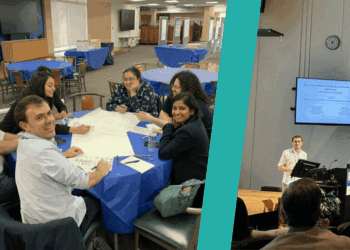
Other highlights include giving at talk at the 2023 EACR Congress, visiting and speaking at the AstraZeneca DISC in Cambridge, as well as working with a variety of scientists towards a shared goal.
More about EACR-AstraZeneca Postdoctoral Fellowships
The aims of this funding are to support the career development of outstanding EACR members in the early stage of their careers, and to train the next generation of scientists engaged in innovative research in areas where AstraZeneca has demonstrated leadership through its pipeline and research programs. We will announce when the next call for applications is open in our email bulletin.