

EACR Travel Fellowships are co-sponsored by Worldwide Cancer Research and provide funds up to €3,000 to early-career cancer researchers. For more information on how to apply for Travel Fellowships, you can visit the EACR website.
Home institution: Institute of Biomedical & Allied Health Sciences (IBAHS), University of Health Sciences, Lahore, Pakistan
Host institution: Toxicology & Chemotherapy Unit, German Cancer Research Centre (DKFZ), Heidelberg University, Germany
Dates of visit: 08 April 2018 – 02 May 2018
Cells are units of our body like bricks of a wall while cancer is a group of diseases where these cells show an uncontrolled increase in number. This abnormal overgrowth disturbs the normal functions of body and may lead to worse conditions, including death. Before treatment of cancers, we need to understand the reasons behind abnormal growth of respective cells. These reasons, at the level of a cell, can be termed as “molecular basis” of a disease. Understanding the molecular basis helps us to identify routes of a disease, level of threat to the patients, possible treatment strategies and finding new compounds/drugs for better control.
I noticed the EACR travel fellowship program from the official website of EACR. I decided to apply to achieve my short term goals, including certain advanced research experiments, submission of an article and designing a molecular pathway at my host lab in DKFZ.
Can you summarise the research you did or what you learned on your visit?
I performed/achieved the following research oriented goals during my stay at host lab:
- Designed a cell cycle pathway by Ingenuity software at core facility of DKFZ, Heidelberg (Required Real-Time PCRs results for designing the pathway, which were obtained at IBAHS in September 2017).
- Western blot experiments were performed which were required to finalise the data for one research paper.
- A research article was finalized and submitted to the Journal of Experimental and Clinical Cancer Research (research work and the initial draft was completed at IBAHS).
Describe a ‘typical day’ on your visit
A typical day consisted of going to the lab at around 8:30am, starting up of research/write-up work, having coffee break at 11:30am with all lab fellows, lunch at 14:00 pm and coming back to the accommodation at about 17:00pm.
What were you able to do that you could not have achieved in your home lab?
Designing of signalling pathway was not possible at my home lab. This exercise provided us key information about signalling pathways regulated by the compound erufosine, in focus as a therapeutic agent for breast cancer treatment, which will be base line data for our future collaborative studies.
Did you take part in any interesting local/cultural activities?
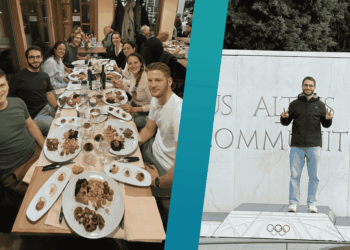
Hanging out with old and new fellows, who came from various countries, was a very healthy exercise because it provided the opportunity for different combined efforts in the field of cancer research. Heidelberg, a beautiful city with knowledge in the air, is like a second home to me and always inspires me for further research efforts.
Have you brought back any specific knowledge/technique that has benefited your home lab?
The host institute is one of the leading cancer research institutes of the world, equipped with the latest research tools/equipment and lead by world renounced mentors.During the trip, following commitments were made from the host institute:
- We will carry on with our on-going collaborative research efforts in the field of cancer research.
- Postgraduate students from my working group will visit the host lab at DKFZ for a short period of time (1-6months) for their respective research activities.
- Applications will be submitted for joint funding to launch new research projects related to cancer research.
- Efforts will be made for joint publications and further strengthening of research bonds between the partner institutes.
How has this visit been beneficial to your research and/or your career?
The visit was indeed a valuable opportunity for me to learn and broaden my understanding about different research aspects. In addition, it provided me with a bit more recognition in my working institute as an active researcher, which will be fruitful for me in future plans and professional career.