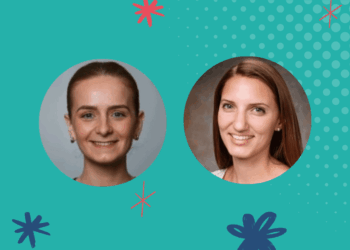


In this episode Professor Xin Lu, Director of the Ludwig Institute for Cancer Research, Oxford Branch, and keynote speaker at EACR 2026, talks about her scientific journey shaped by the early, influential studies of P53 and its role as a central tumour suppressor.
Tracing her journey from early training in China to landmark work in the UK, the conversation explores how fundamental questions about DNA damage, cell death, and oncogene stress led to the discovery of the ASPP family of P53 regulators.
The discussion further expands into the concept of cellular plasticity as a driving force in cancer initiation, progression, and therapy resistance, with insights into how tumour suppressors, infection, and environmental stress shape cellular identity. Together, these reflections highlight how decades of curiosity-driven research have helped define modern cancer biology.
Listen here, scroll down for the transcript and subscribe now via Spotify, Apple Podcasts, Amazon Music/Audible, Deezer or YouTube so you’ll never miss an episode. You can find all episodes and their transcripts here.
Our host is Dr. Alexandra Boitor, EACR Scientific Manager.
Episode transcript
Alexandra: You are very well known for your longstanding interest in mechanisms of tumour suppression and cellular plasticity, centered on studies of p53, you being one of the very first researchers to study this tumour suppressor. And then also the ASPP family of proteins, or apoptosis stimulating protein of p53, which you discovered. Over the years you looked at different aspects of cancer biology, from tumour suppression to cell death differentiation, cell growth, gene expression.
But what I’m wondering is how did you find and define your research interest? What drew you into cancer research in the first place, and specifically to cellular plasticity?
Xin Lu: I probably should tell you a little bit about my background. And then that would also naturally lead to how did I get into tumour suppression as my major interest and research topic, which until today, I’m still fascinated and interested in this area of research.
I started my education in China and my undergraduate study is in biochemistry, and then at that time I was fascinated by the emerging research area of molecular oncology. I joined a group in the Cancer Institute, Chinese Academy of Medical Sciences, to do my Masters degree, and it was the beginning of the oncogene era and where people discover the human oncogene, like the RAS oncogene.
Then subsequently, the tumour suppressor gene concept was also revisited and people started looking into tumour suppressor genes. So it was the area molecular oncology was emerging, and I was really fascinated by the ability to study cancer at the molecular level.
So I did my Masters degree in Beijing in the Cancer Institute, Chinese Academy of Medical Sciences, and working on oncogenes, but of course I was also starting to be interested in tumour suppressor genes as well. I subsequently got a research fellowship from WHO and the International Agency for Research on Cancer, which allowed me to come to the UK at the Imperial Cancer Research Fund for one year training, and I studied in a group, which also specialize in oncogene cooperation: Hartmud Land’s Group in Lincoln’s Inn Field (ICRF).
After that, I did a detour and then I worked in the lab, which is specialising in intermediate filaments, keratins. And that gave me the basic training of epithelium biology. But then I realized my heart is at the oncogenes and tumour suppressors, and particularly in tumour suppressors. And that was the time when I then joined David Lane’s Lab and studied p53.
Just to give a background, I did my PhD in Birgitte Lane’s group, and Birgitte Lane is the wife of David Lane. So it was very convenient for me to shift lane from Birgitte Lane to David Lane. And then I started my Postdoc on p53.
When I started with David, it was the time we actually don’t know how the wild type p53 would act in tumour settings. Because it was the time we realized p53 is a tumour suppressor and therefore, in cancers, you’re supposed to see p53 is all mutated. But then the cell lines I started to work with, they’re all containing wild type p53.
I actually was doing all this p53 sequencing at the time where sequencing A PCR product was difficult. But I managed to sequence them all. They were all wild type p53 and David Lane would say “oh, you haven’t sequenced them all, so it must be mutated”. It just mutated somewhere else, so I sequenced every single p53, sequencing all nine different cell lines, and they were transformed by RAS and MYC oncogenes. They were all wild type p53, but then the four cell lines have a RAS mutation. They all have a mutant p53. So there was a pattern emerging where wild type p53 somehow is maintained in the RAS and MYC oncogene transformed mouse prostate cancer cell lines. It’s mutated in the RAS nonly transformed cell line.
So my fascination of looking into what this wild type p53 is doing in these cancer cell lines and led me to make two observations during my PostDoc at the time. One, p53 staining was all clustered in the micronuclei. Those are the nuclei much smaller than the normal, and then they stem very strongly.
Doing my PhD in Clare Hall laboratories, and that’s where all the DNA damage and repair activities were, educated me about what micronuclei means. That means there’s something with the damage, the DNA in this micro nuclei. So that gave me an idea. Maybe p53 can be accumulated in DNA damaged cells.
The second observation I saw with this RAS/MYC transformed cells, that changed the colour of the medium really rapidly, and they die a lot. That also suggested, when they have the wild type p53, these rats make transformed cells, somehow these cells die much more than the ones with the mutant RAS transformed cell.
That was the beginning of my Postdoc and basically I spent the next three years following all of these. And it turns out p53 is a major sensor to damage the DNA and I thought I have the whole time on my side to work out exactly what triggers p53 response. And of course there was a paper published while I was still trying to figure it out and precisely what DNA lesion was causing the DNA damage response. So that led us as one of the early groups to report the p53 response to DNA damage.
And then also during that time, we also observed p53 response to UV and gamma radiation has a different kinetics and also different response. Until today, I still don’t think we completely worked it out, why there’s a such a difference in the kinetics in p53 response to UV versus gamma radiation. But it certainly attracts my interest in working on a single molecule, which turns out to be the most important tumour suppressor in human cancer.
Alexandra: It’s always fascinating to hear research stories of established researchers and see how nicely things fit into the puzzle in the end. I’m sure it wasn’t so linear throughout, but it’s so nice to see how nicely it aligns and how much one can achieve within their career.
But I also find it fascinating, as a reminder of how new the research field actually is and, as you said at the beginning of your career, it was just forming research field molecular biology of cancer, and now some of the things that you’ve helped discover and you studied have basically become dogma. So it’s always fascinating to see that.
The second part I might want to tell you then is my own view of cell plasticity and why I still work on p53 related areas of research. And then how did that lead us to discover the ASPP family of proteins. As I mentioned, I was really fascinated about how p53 responds to DNA damage and oncogene stress. And, when I started my own group, and it was obviously very important in my mind that I need to look for something which is my own. But also most importantly, which could play a major role in regulating the tumour suppressive function of p53.
The time when I started p53 was the molecule of the year. And what we know then, p53 is a transcription factor, it could turn on and off lots of genes. But the most well-known target of p53 at that time was the inducing cell cycle arrest. Also some of the target has been identified in my induce apoptosis, which is a type of cell death. My idea was, well, cell cycle arrest is not permanent, and if you truly want to damage the cells, you really want to kill the cells and completely eliminate it.
And the question is can we find a way selectively pushing p53 towards inducing cell death? And in a way, whatever is selectively regulating p53’s ability to induce death, would be far more important than it only causing cell cycle arrest. And that was the thinking behind it.
So I started looking for things, which can selectively push p53 towards inducing cell death when the cells are damaged. And that’s really how we discovered the ASPP family of proteins. ASPP stands for apoptosis stimulating protein of p53. But it is also a group of proteins containing protein sequences called ankyrin repeats, SH3 domain and prolin rich sequence containing proteins.
And this is a family of proteins. It’s evolutionally highly conserved in C. elegans, and in Drosophila, which is the invertebrate. There is only one member of the ASPP family, there’s also only one member of p53 in invertebrates, but by the time to vertebrate, they are three members of the ASPPs, which has ASPP1, ASPP2. They both are the activators of p53-induced death. And then there’s an inhibitory form of ASPP called iASPP, which inhibits p53-induced apoptosis. It’s the same also by the time it gets to vertebrae. There are three members of p53 family. They are p53, 63, and 73. So that coincidence of the evolutionary development between the ASPP and p53 family is certainly still interesting and fascinating, and that’s where we are at the moment.
Alexandra: And the ASPP family of proteins brings incredible promise to cancer prevention, detection and treatment. ASPP proteins could serve as novel biomarkers and excellent targets for the development of cancer therapies. So it’s always really interesting to hear more about the journey of discovering those proteins.
Continuing on this note of research projects that you’ve developed and worked on, I wanted to ask you, what is your favourite research project? The one that you think was the most interesting that you’ve ever worked on? And it can be something that you are currently working on in your group or something you might have worked on in the past.
Xin Lu: Well, I’m obviously biased and so I think the most interesting remains to be how p53 is regulated, and I think the ASPPs are very interesting and fascinating regulators of p53, so regulation of p53 and the whole role of the regulating p53 function in tumour suppression remains to be one of my most interesting projects. But, also that would lead me to why we are interested in cell plasticity and why this regulation is fascinating.
So when we talk about cell plasticity, I would’ve thought this is perhaps the most important biological process that’s very much involved in cancer initiation, cancer progression, and in cancer resistance to therapy. Why? Well, cell plasticity in my own interpretation is the ability of cells to change in response to external signals.
And what would be the most important things to prevent cells to change the plasticity? This is the key. And what are the molecular switches, which turn on and off cell plasticity? And I think this is the fundamental area of cancer research. If we truly understand how the cell plasticity is controlled, can be turned on and off in response to defined signals, we will make a major advancement in our understanding of cancer initiation, progression, and resistance to therapy.
The best example of cell plasticity is probably induced pluripotent stem cells (IPS). If go back to the history, you only need four transcription factors to induce any of the differentiated cells like the fibroblast cells and reprogram it all the way to the pluripotent stem cells. And that process is not actually very effective, however, you could enhance the IPS efficiency by knocking out tumour suppressors, and p53 is the number one. If you knock out p53 and given the four transcription factors, you can enhance the reprogramming efficiency by a thousand fold. If you knock out many other tumour suppressors, you could do the same. May not be the same extent of the efficiency enhancement. What this is really telling us is tumour suppressors are the major break for allowing cells to change sulfate. It controls the ability of the cells to turn on the cell plasticity.
MYC oncogene is one of the four transcription factors, which promote the reprogramming. So you can see how intimately it’s linked between reprogramming the cell plasticity change, and in the cancer initiation and suppression.
The second part, which is also very important, about cell plasticity change, is in response to infection. So many of those infectious agents are very potent inducers for cell plasticity change. And one of the things my lab has been fascinated by recently, well in the last 10 years or so, actually, is about the H. pylori. This is the very well-known bacteria. It’s infecting about half of the world population and, fortunately, only very few people get gastritis and then also get gastric cancer. But they are two major types of H. pylori. One contains an oncoprotein called CagA, and the other are not. So most of the Asian strains, the ones present in Southeast Asia and China contain CagA, and most of the H. pylori strain in the West do not contain CagA. So if the H. pylori contains CagA, then that bacteria will have up to six-fold enhanced ability to induce gastric cancer.
And one of the major biological functions of CagA is to induce cell plasticity change. So if epithelium cells have CagA, the chance of changing from the gastric epithelium to mesenchymal cells, a process called EMT, is dramatically increased. And it turns out the most important cellular target of CagA is the protein we discovered, ASPP2.
Not only do we know the CagA binds ASPP2. We also collaborated with a group and solved co-crystal structure between CagA and ASPP2. And there is a paper coming out in Cancer Discovery by studying the H. pylori CagA in six different countries and looking for the link with cancer instance, the virulence of CagA. And then the determining factor is its ability to bind to ASPP2. The more CagA in the bacteria sting, to be able to bind ASPP2, the more oncogenic that H. pylori strain is.
And we do have evidence of how the ASPP2 CagA complex is able to control the cell plasticity change. So that is one of the areas, the angle. How we see the cell plasticity involving cancer initiation and progression, and then why we are fascinated and interested in studying cell plasticity in gastric cancer.
And then the final one is the gastric cancer. And it’s not the only place where cell plasticity change happens. And in the upper GI where the esophageal cancer, particularly esophageal adenocarcinoma and buried esophagus, is also very well recognized and accepted as a place where cell plasticity is changed quite dramatically. And this is the reason why we are very interested in focusing on studying the role of cell plasticity, the regulation of the ASPP and p53 and in the upper GI cancer, and particularly in response to infection like H. pylori.
Alexandra: This also very nicely answers one of my other questions, which was regarding how or why did you switch the cancer type that you work with in your career from melanoma at the beginning to esophageal and gastric cancers now. So thank you for that. Is this something that we might find out more about, this story, at your lecture at the EACR Congress? About how these H. pylori induced gastric cancers develop?
Xin Lu: Yes, I would definitely plan to talk about the H. pylori and the ASPP2 link in regulating cell plasticity. I will also talk about a recent work on immuno chemotherapy of esophageal adenocarcinoma, and that certainly is one of the areas we are talking about at the conference.
Alexandra: Well, thank you very much. I’m really looking forward to learning more about this and thank you so much for telling us more about the connection between p53, the ASPP proteins and MYC. I think our conversation has been almost like a fascinating lecture to be honest.
As we’re approaching the end of the episode, I wanted to ask you if you could tell me one thing that you’re looking forward to at the EACR Congress in June.
Xin Lu: Yes, I’m looking forward to meeting old friends and new friends, particularly, and then to learn the new technology and latest development in cancer research. Of course the most exciting area I’m hoping for is establishing new collaborations with all the people there. That’s what I’m really looking for and that’s what the conference is about, allowing people to learn things and to meet new people and set up new collaborations.
Alexandra: I think conferences in general and the EACR Congress in particular are great, both for learning the latest developments, but also to network with old friends and to develop new collaborations. This has been brilliant. You as a person and your career are truly inspirational. I’d like to ask you so many more questions, but unfortunately, we’re just about out of time, so we’ll leave it there for now. Once again, thank you so much for joining me on The Cancer Researcher Podcast.
Xin Lu: Thank you for inviting me and I’m looking forward to the EACR meeting.
Enjoyed it? Stay curious with The Cancer Researcher Podcast. Subscribe now via Spotify, Apple Podcasts, Amazon Music/Audible, Deezer or YouTube so you’ll never miss an episode. You can find all episodes and their transcripts here.
Suggest a topic for a future episode: What would you love to learn more about? Click here to give us your topic suggestions in a short online form. We warmly welcome your ideas and input!