
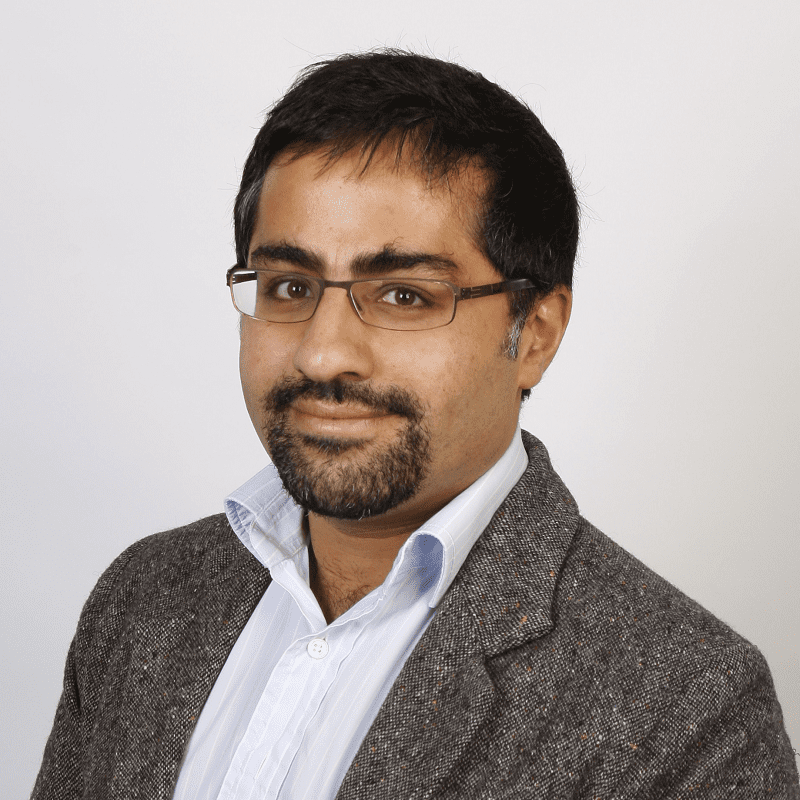
 Sam Behjati is the winner of the first Pezcoller Foundation-EACR Rising Star Award, which celebrates a cancer researcher who has the potential to make significant contributions to future cancer research progress. Doctor Behjati will be presented with his award at the EACR Congress (9-12 June 2021) by The Pezcoller Foundation President, Enzo Galligioni. Learn more about the award.
We thought it was an ideal time to ask Dr Behjati some questions about his career so far and the research he is involved in.
What excites you most about your current research?
Some of the work that we do takes us to novel spheres of cancer biology. When I see a bit of data that shows something we did not know existed – akin to finding a new bird species – my research is at its most exhilarating. What excites and drives me on a daily basis, however, is the thought that my research may eventually contribute to improving the care of children suffering from cancer.
the most important aspect of science is the science itself
What qualities do you look for when you’re hiring new scientists to your lab?
Kindness, independence, and new skills. It is important to me that my staff are kind, help each other and work together. Most of our papers have multiple first authors as we deal with large and complex data sets that need to be worked on and viscerally scrutinised by different people. Furthermore, I do not have the capacity or ability to micromanage people so my staff have to be able to work and think independently on a day to day basis and use our weekly discussions to determine the overall direction of travel. Finally, I have great many weaknesses and deficiencies so I try to hire scientists who bring skills to the table that I or others in the group don’t already have.
How important is networking in science?
What matters to me is to foster relationships with immediate colleagues, with collaborators further afield, and to engage in the scientific discourse in writing and through talks at conferences and seminars. In the end, however, the most important aspect of science is the science itself, which we can easily get distracted from by overemphasizing networking including social media activities.
When did you know you wanted to be a scientist and was your career path planned out in any way?
Yes and no. Yes – because from an early age I knew I wanted to become a paediatrician and a scientist. And no – because as a medical student I mostly enjoyed classical physiology and subjects like ethics, but certainly not cancer biology or genetics. In fact, I distinctly remember avoiding classes in both subject as an undergraduate. It was not until I started speaking to patients as a clinical student that I discovered my passion for oncology generally and for paediatric oncology in particular.
You’ve had an incredible career in cancer research. What is the secret behind your success?
If I had one, my secret would be that I have been very fortunate to be surrounded by extremely bright and collaborative colleagues throughout my career. The science I do relies on teamwork, on highly skilled individuals working together towards a common goal. I have found the Wellcome Sanger Institute, where my research is based, to be a most collaborative place for team science. Without Sanger I would not be in the position I am in now.
And if I had a second secret, it would be that I had the privilege to learn from masters of our trade, Mike Stratton and Peter Campbell, as a doctoral student. They both have had an enormous influence on the way I think and conduct science, and thankfully they continue to share their wisdom with me as mentors.
About Dr Behjati
Dr Behjati is a Group Leader and Wellcome Trust Intermediate Clinical Fellow working across cellular genetics and cancer. His research sits at the interface of cancer genomics and single cell transcriptomics.
Dr Behjati’s team uses cutting edge single cell techniques to understand normal human development and how normal development relates to disease. The focus is on understanding and quantifying the nature and origins of cancer cells, particularly childhood cancers. To do this, the research combines the study of somatic genomic changes, bulk and single cell transcriptomics, and mathematical modelling of data.