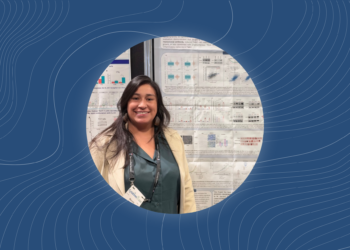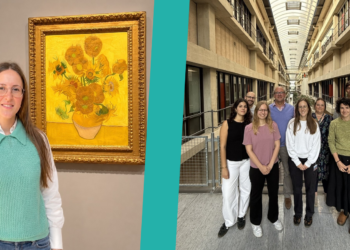
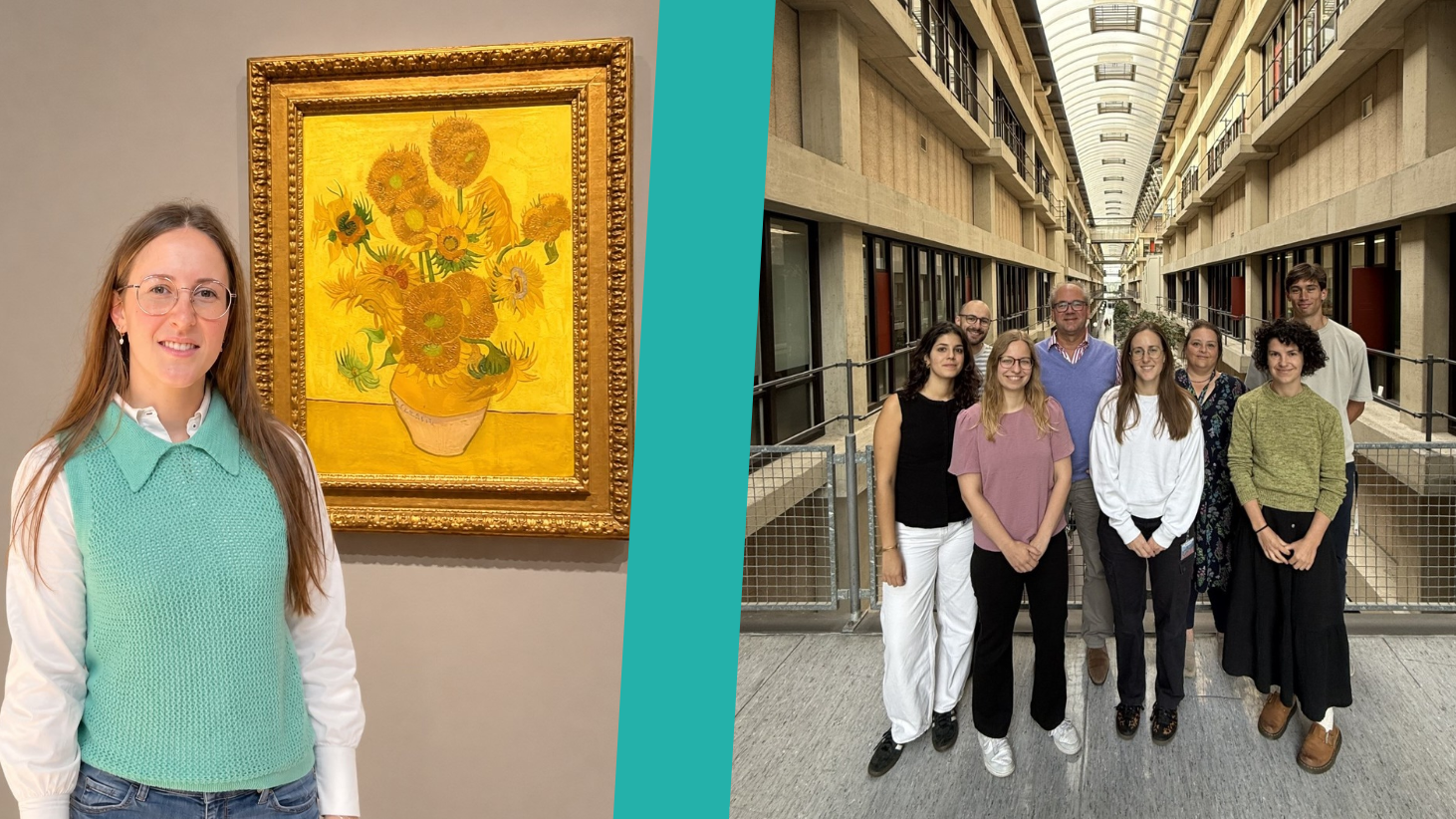
Erica Grassenis is a PhD student at the Università degli Studi di Milano-Bicocca, Italy who received an EACR Travel Fellowship to visit and work at the University of Amsterdam (UMC), The Netherlands, from June to August 2026.
The EACR, with support from Worldwide Cancer Research, provides Travel Fellowships of up to €3,500 to enable early-career cancer researchers to gain new skills through a short-term visit to a lab or research group in another country.
You can read about other Travel Fellows and their experiences here.
Tell us a little bit about your research.
My PhD project focuses on an innovative cell therapy for Acute Myeloid Leukaemia (AML), using immune cells called CAR-CIK cells that are engineered to recognise and kill leukemia cells. These cells are given intravenously, but to be effective they need to reach the bone marrow, where AML cells are found. My research aims to improve the ability of CAR-CIK cells to reach and enter the bone marrow. We are engineering these cells to better recognise signals produced by the leukemic environment and to interact more effectively with blood vessel cells, facilitating their migration from the bloodstream into the bone marrow.
Why did you decide to apply for an EACR Travel Fellowship?
I decided to apply for an EACR Travel Fellowship because it represented a unique opportunity to expand my scientific expertise, gain access to specialised technologies, and strengthen my international research network. My PhD project focuses on improving CAR-T cell trafficking to the bone marrow in acute myeloid leukemia (AML), and I wanted to acquire advanced experimental skills that were not available in my home laboratory.
The fellowship offered the opportunity to work alongside experts in leukocyte transendothelial migration, gain hands-on experience with advanced imaging and flow-based assays, and bring new knowledge and methodologies back to my research group. I also saw it as an important opportunity for my professional development and to become more integrated into the international research community.
Why did you choose the host lab?
I chose Professor van Buul’s laboratory because of its internationally recognised expertise in leukocyte transendothelial migration and vascular biology. My project investigates how glycan engineering can improve CAR-T cell interactions with the bone marrow endothelium, making the laboratory’s expertise particularly relevant to my research. Although there was no previous collaboration between our groups, I identified this laboratory as an ideal environment to acquire specialised technical skills and address important questions in my project. I was particularly interested in its expertise in flow-based adhesion assays and advanced microscopy approaches to investigate leukocyte–endothelial interactions in real time. The shared interest in the CXCL12–CXCR4 axis also provided an excellent scientific basis for establishing a new collaboration.
Can you summarise what you learned on your visit?
During my three-month research period, I focused on how glycan engineering can improve the interactions between CAR-T cells and the vascular endothelium, with the ultimate goal of promoting their recruitment to the bone marrow in the context of acute myeloid leukemia (AML). My project explores the use of enzymatic fucosylation to increase the expression of the sialyl Lewis X (sLeX) determinant on CAR-T cells, thereby enhancing their ability to interact with E-selectin expressed by activated endothelial cells.
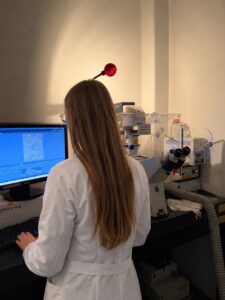
Throughout my stay, I worked on advanced experimental approaches to investigate leukocyte-endothelium interactions under physiologically relevant conditions. Specifically, I gained experience in flow-based adhesion assays and advanced microscopy techniques, which allowed me to study cell adhesion and transendothelial migration in real time across two different types of endothelial cells. I also developed skills in image acquisition, quantitative image analysis, and the interpretation of dynamic cell migration processes.
Describe a ‘typical day’ on your visit.
Most of my working day, which generally started at 9:00 a.m. and ended at 5:00 p.m., was spent in the laboratory, carrying out experiments, preparing samples, and using advanced imaging and microscopy techniques. Every Monday morning at 9:00 a.m., we attended a meeting involving all the laboratories affiliated with the Department of Medical Biochemistry. This was followed, at around 10:00 a.m., by a meeting with our Principal Investigator (PI), during which I presented my experimental plan for the week to the other members of the research group. On Wednesday mornings, we also had a meeting at 9:00 a.m. to present the results obtained during the previous week and discuss any questions or experimental challenges.
I had the opportunity to interact closely with researchers and PhD students working in the fields of leukocyte trafficking, vascular biology, and cell migration. These interactions were particularly valuable, as they allowed me to exchange ideas, troubleshoot experimental problems, and learn different approaches to addressing scientific questions. Depending on the experimental schedule, I also devoted time to analysing microscopy images, discussing results with other members of the group, and planning subsequent experiments.
What were you able to do that you could not have achieved in your home lab?
The main advantage of this research visit was the opportunity to access specialised technologies and expertise that are not currently available in my home laboratory. In particular, I gained hands-on experience with flowbased assays to investigate CAR-T cell adhesion to endothelial cells under physiologically relevant shear stress conditions. I also had the opportunity to learn advanced live-cell imaging approaches to visualise and characterise leukocyte–endothelial interactions and transendothelial migration in real time.
These techniques are particularly important for my project because conventional static adhesion and migration assays cannot fully reproduce the dynamic interactions occurring within the vascular microenvironment. Working in a laboratory with specific expertise in these methodologies allowed me to acquire both practical technical skills and a deeper understanding of the biological processes underlying immune cell trafficking.
Did you take part in any interesting local or cultural activities?
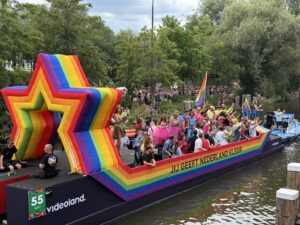
Yes! This year, WorldPride took place in Amsterdam, so I had the opportunity to take part in several events and activities during the two weeks of Pride celebrations. On Sunday August 1st, there was also a spectacular parade featuring 80 boats sailing through the city centre. It was a really unique and exciting cultural experience!
What was a personal highlight of your trip?
One of the highlights of my trip was becoming part of an international research environment and having the opportunity to learn directly from scientists with expertise in a field closely related to my own research. I particularly valued the daily interactions with colleagues, the scientific discussions, and the opportunity to exchange ideas with people from different backgrounds. It was rewarding to see how a different research environment approaches scientific questions and experimental challenges. On a personal level, living abroad for three months also helped me become more independent, confident, and comfortable working in an international environment.
Was the host institution very different from your own?
Although both the host institution and my home institution share a strong commitment to high-quality biomedical research, I particularly appreciated the highly collaborative and interdisciplinary environment of the host laboratory. For instance, the postdoctoral researcher with whom I shared an office held a PhD in Physics, while the PhD students came from diverse academic backgrounds, including ophthalmology, biology, and nutrition.
One aspect I found particularly valuable was the close interaction among researchers with complementary expertise. This encouraged scientific exchange and provided opportunities to approach experimental challenges from different perspectives. I also greatly appreciated the weekly laboratory meetings, which offered an opportunity to learn about the research activities of other group members and to present and discuss my own progress.
Did you have a personal mentor or anyone who particularly helped you?
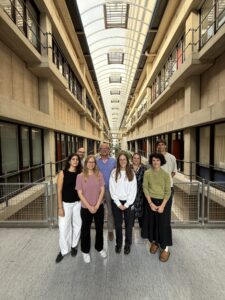
I was mainly guided by a postdoctoral researcher who currently works as a laboratory technician. Her support was extremely important throughout my stay, as she taught me the basic laboratory techniques and provided me with valuable tips and practical advice to help me avoid common mistakes and improve my experimental skills. She was always very polite, helpful, patient, and attentive to detail. I particularly appreciated her willingness to answer my questions, explain procedures carefully, and guide me whenever I encountered difficulties.
One of the aspects I appreciated most was the collaborative atmosphere within the laboratory. Scientific discussions were an integral part of everyday work, and I always felt encouraged to ask questions, share ideas, and learn from researchers with different scientific backgrounds. This supportive environment, together with her guidance, made the experience particularly stimulating and contributed significantly to my scientific and personal development.
What beneficial knowledge have you brought back to your home lab?
The main outcome of my visit was the acquisition of practical skills in performing flow-based adhesion assays and using advanced microscopy techniques to study interactions between leukocytes and the endothelium. Upon returning to my home laboratory, I shared the knowledge and experience I had gained during my visit with my colleagues. Although we are currently unable to reproduce the flow-based experiments in our laboratory, the expertise I acquired in operating these microscopy systems can also be applied in my own research environment, particularly for immunofluorescence staining and image acquisition and analysis.
How has this visit been beneficial to your research and your career?
This research visit has been extremely valuable for both my scientific development and my future career. From a professional perspective, working in an internationally recognised laboratory helped me improve my scientific communication skills, gain confidence in an international research environment, and establish connections with researchers working in complementary fields.
Living in a different country for a period of time also gave me the opportunity to discover new traditions and cultures, improve my English language skills, and share wonderful recipes and culinary traditions with my Chinese flatmate. This experience allowed me to grow not only professionally but also on a personal level, by becoming more open-minded and gaining a deeper appreciation of cultural diversity.
Is there anything else you’d like to mention?
This opportunity allowed me to step outside my usual research environment, acquire valuable scientific and technical skills, and build meaningful international connections.
I would like to sincerely thank the EACR for supporting this experience through the Travel Fellowship. This opportunity allowed me to step outside my usual research environment, acquire valuable scientific and technical skills, and build meaningful international connections. I am particularly grateful to Professor van Buul and all the members of his laboratory for welcoming me, sharing their expertise, and making me feel part of their research team. This experience has been much more than a scientific training opportunity: it has contributed significantly to my personal growth, independence, and motivation as an early-career researcher.
Want to find out more?

If you are interested in applying for the Travel Fellowship scheme, please click here for more information: EACR Travel Fellowships