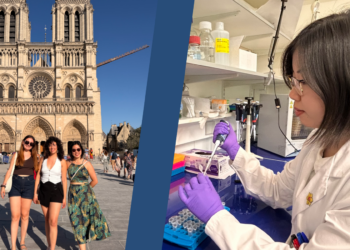

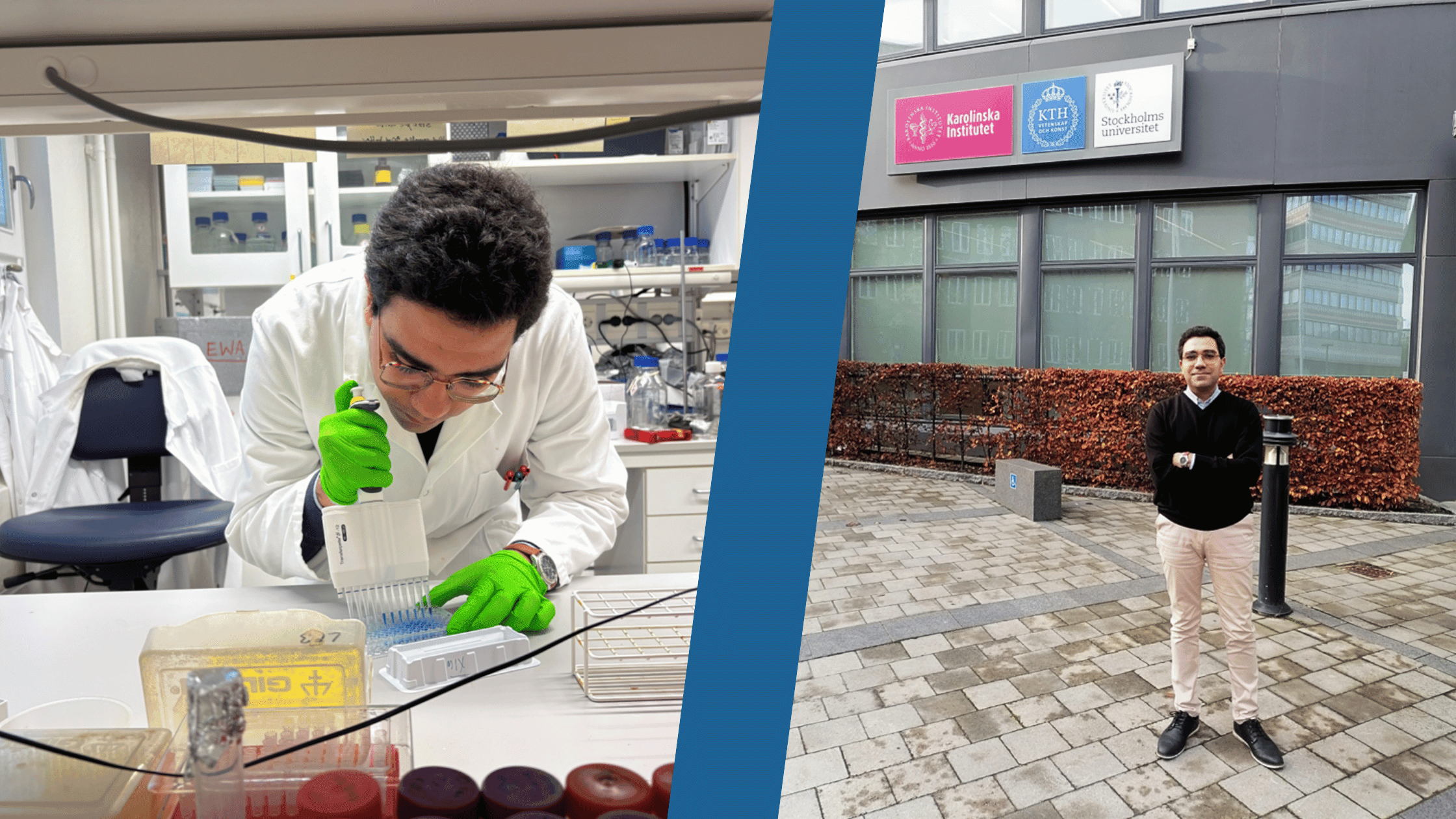
Mohammed Moustapha Anwar is a PhD student at the Centro de Investigación Príncipe Felipe (CIPF), in Valencia, Spain who received an EACR Travel Fellowship to visit and work at the Lund Protein Production Platform (LP3), Lund University, in Sweden between August and November 2025.
The EACR, with support from Worldwide Cancer Research, provides Travel Fellowships of up to €3,500 to enable early-career cancer researchers to gain new skills through a short-term visit to a lab or research group in another country.
You can read about other Travel Fellows and their experiences here.
What is the topic of your current research?
My research targets DHODH, an enzyme cells use to produce nucleotides—the building blocks of DNA. Cancer cells rely on this process to divide rapidly. During my PhD, I designed and implemented a discovery pipeline that identified NK-A 17E-233I, a small molecule that inhibits this enzyme and disrupts cancer cell growth. The compound damages DNA and halts cell division while preserving the cell’s energy system, a key limitation of older drugs. This research opens new opportunities for therapies not only against cancer, but also for autoimmune diseases and viral infections.
During the fellowship period, Mohammed’s previous results were published in the Journal of Experimental & Clinical Cancer Research and he also presented this work at the SciLifeLab at Karolinska Institutet in Stockholm, Sweden. The article can be found at this link.
Why did you decide to apply for an EACR Travel Fellowship?
The EACR plays a vital role in advancing cancer research by fostering collaboration and supporting early-career scientists. The Travel Fellowship offered a unique opportunity to further my PhD project in a new research environment.
My research tests whether human DHODH, an enzyme essential for the rapid nucleotide production that fuels cancer cell proliferation, can be inhibited in a different way. Through a prospective virtual screening approach, I identified and characterised NK-A 17E-233I, a natural small molecule that demonstrates anticancer activities. I wanted to characterise this molecule in greater depth and confirm its mechanism using biochemical and biophysical methods unavailable in my home laboratory.
The fellowship allowed me to work in a laboratory with strong expertise in protein production, kinetics, and biophysical assays. This experience expanded my technical skills and deepened my understanding of enzyme targeting and rational drug design. Beyond the scientific benefits, living and working abroad strengthened my independence and expanded my professional network—important steps toward my goal of becoming an independent researcher in cancer therapeutics.
How did you choose the host lab?
I chose the Lund Protein Production Platform (LP3) because of its exceptional expertise in recombinant protein production, crystallisation, biophysical characterisation, and protein structure determination. The laboratory is led by Dr. Wolfgang Knecht, the manager of LP3 and a leading scientist who has investigated DHODH and its inhibitors for more than 25 years, publishing extensively on its biochemical and biophysical properties. His work has contributed to the characterisation of several small-molecule inhibitors, some of which are now used clinically.
Describe a ‘typical day’ on your visit.
A typical day began with a short walk through Lund’s historic streets on my way to the Department of Biology. Once in the laboratory, I planned and conducted experiments, analysed results, and reported new data. Between experiments, I often reviewed recent literature or wrote up results to guide the next phase of the project.
The laboratory environment was highly collaborative. I regularly discussed experimental strategies and results with Dr. Knecht, whose feedback helped optimise both my experiments and interpretation of the data.
One of my favorite moments each day was the Swedish tradition of fika—a coffee break shared with colleagues. These conversations created a welcoming atmosphere and often sparked new ideas.
What was a personal highlight of your trip?
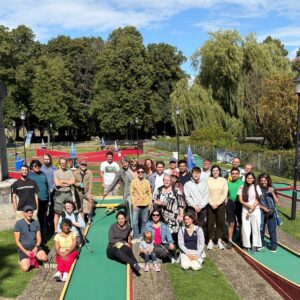
One highlight of my visit was attending the Fourth Protein Production Sweden (PPS) Staff Retreat in Lund. The retreat brought together researchers to discuss PPS operations, present new technologies, and plan future initiatives.
During the event, we visited two major scientific infrastructures: the MAX IV synchrotron and the European Spallation Source (ESS). Seeing these facilities firsthand was inspiring. Both are world-class research centres that support advanced structural biology and materials science.
The retreat also gave me the chance to interact with scientists from diverse fields and learn about innovative approaches to protein production and structural analysis. These conversations broadened my perspective and helped me appreciate how large-scale research infrastructures support modern biomedical discovery.
This open and supportive environment encouraged discussion, creativity, and rigorous scientific practice.
Was the host institution very different from your own or was there anything you particularly liked about the host culture?
The host institution differed in several ways from my home institute, and the experience was both stimulating and rewarding. LP3 is a cross-faculty centre that specialises in protein expression, purification, assay development, and structural studies. This focus provides access to advanced equipment and large-scale infrastructure dedicated to protein science.
What impressed me most was the collaborative culture. Researchers from different disciplines worked closely together and readily shared expertise. This open and supportive environment encouraged discussion, creativity, and rigorous scientific practice.
How has this visit been beneficial to your research and your career?
This visit significantly advanced both my research project and my professional development. Scientifically, it allowed me to investigate the mechanism of NK-A 17E-233I using advanced biochemical techniques and purified human DHODH produced at LP3. Equally important, the fellowship expanded my international network and introduced me to new experimental strategies in enzyme characterisation and drug discovery. Working in a leading protein-science laboratory also improved my technical skills and strengthened my confidence as a researcher.
Overall, the experience helped position my work within the broader field of cancer metabolism and reinforced my commitment to developing innovative therapeutic strategies targeting metabolic vulnerabilities in cancer.
Is there anything else you’d like to mention?
I would like to express my heartfelt gratitude to everyone at the Lund Protein Production Platform (LP3), Lund University. Their generosity, guidance, and warmth made my time there truly extraordinary. Working with them felt like navigating a constellation—each colleague’s insight and support acting as a guiding star, illuminating the path through new challenges and helping me grow as a scientist.
I especially thank Dr. Wolfgang Knecht and his fantastic team: Ewa Krupinska, Dr. Anna Rasmussen, Dr. Victoriia Murina, and Dr. Céleste Sele. Your kindness has left a lasting imprint, enriching not only my research but also the very experience of discovery itself. During my time at LP3, you became more than colleagues—you became a family to me.
Want to find out more?

If you are interested in applying for the Travel Fellowship scheme, please click here for more information: EACR Travel Fellowships