
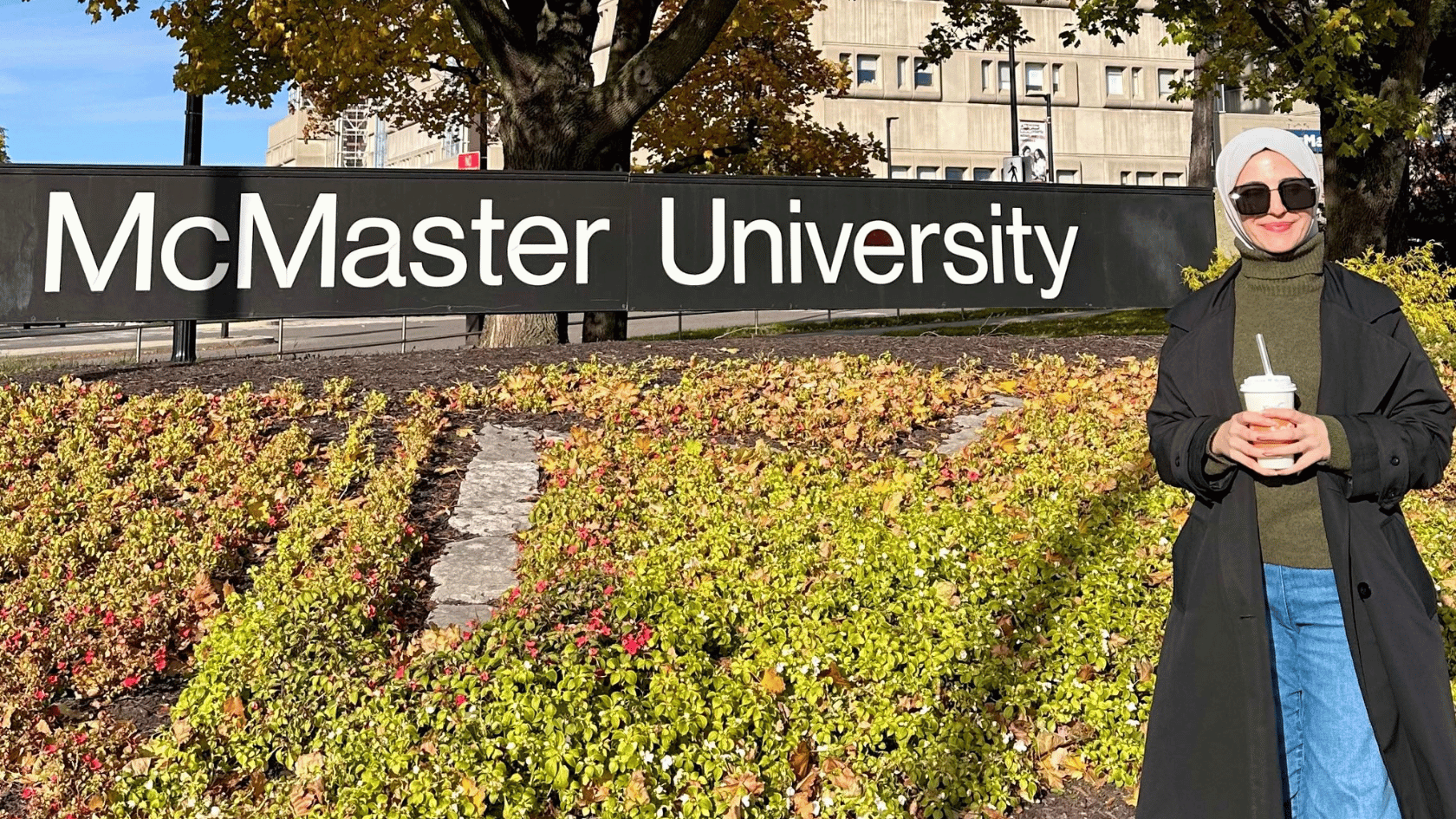
 Fatima Hameedat is a PhD student at the University of Groningen, Netherlands who received an EACR Travel Fellowship to visit and work at the Centre for Discovery in Cancer Research at McMaster University, Canada between 01 October and 24 December 2025.
The EACR, with support from Worldwide Cancer Research, provides Travel Fellowships of up to €3,500 to enable early-career cancer researchers to gain new skills through a short-term visit to a lab or research group in another country.
You can read about other Travel Fellows and their experiences here.
What is the topic of your current research?
Glioblastoma is an aggressive brain tumour that has limited treatment choices, which have not yet improved survival by more than 15 months. I am working on developing a polymeric platform composed of RNA therapeutics with the purpose of applying it as an immunotherapeutic to prevent the recurrence of glioblastoma. In Sousa’s lab in RUG, I have developed an RNA therapeutic in a polymeric delivery system, used a cellular model to prove its efficacy, but needed to use a more proper model, such as a patient-derived xenograft mice model that was developed in Dr. Singh’s lab in McMaster.
Why did your decide to apply for an EACR Travel Fellowship?
The EACR is supportive of young researchers as PhD students who are eager to learn more in their field. I have been following your Instagram and LinkedIn accounts and your The Cancer Researcher online magazine, where I could recognise that you support empowering scientists to cross borders to gain more knowledge and even helping them to envision their future in a better shape.
Why did you choose the host lab?
I attended several webinars where Prof. Dr. Sheila Singh was the invited speaker, and, due to a similar research area, I reached out to her and asked for a collaboration to learn practically about the in vivo model of Glioblastoma that they had developed.
Can you summarise the research you did or what you learned on your visit?
The first month was fully occupied with training and shadowing researchers in the lab, following Chokshi et al. protocol (1). From collecting the patient samples from a surgeon collaborator in a hospital to culturing them. The cells were engrafted intracranially in mice 2 weeks prior to conducting my experiment. By November, I started my experiment after reproducing the particles in Singh’s lab, and most of the experiment time was in the animal facility. In the meantime, I shared the office with all the lab members in a shared open-office style, which was an extraordinary experience for me. I experienced being in sync with everyone, focused on their screens, and being productive in terms of data analysis and writing. I also wrote my first original article, which was recently published in Advanced Functional Materials (2). Also, we had frequent subgroup and entire group meetings, which I consider them were part of the learning process, as well as the neuroscience translational group meetings (clinicians and scientists), where translational science was the main topic discussed.
Did you take part in any interesting local activities?
I did hikes during the 3 months of my stay; October was still summery (Scarborough-Cliffcrest, Toronto), November was stunning with Autumn colors (Dundas Peak, Hamilton, & Grindstone Creek, Burlington), and December was freezing and snowy winter. During the hikes, I had the chance to spot some birds such as Northern Cardinal, White breasted Nuthatch, Black-capped Chickadee, and others but these are captured with my camera, and I could engage with the latter mentioned two. Also, I had the chance to attend an extraordinary Halloween party organized annually by Dr. Singh’s lab members, inviting young scientists to attend under the theme of Super Mario “SUPER SINGH LAB WORLD!”. It was delivered in a simple scientific language with some challenges to teach them about the immune system and fighting glioblastoma.
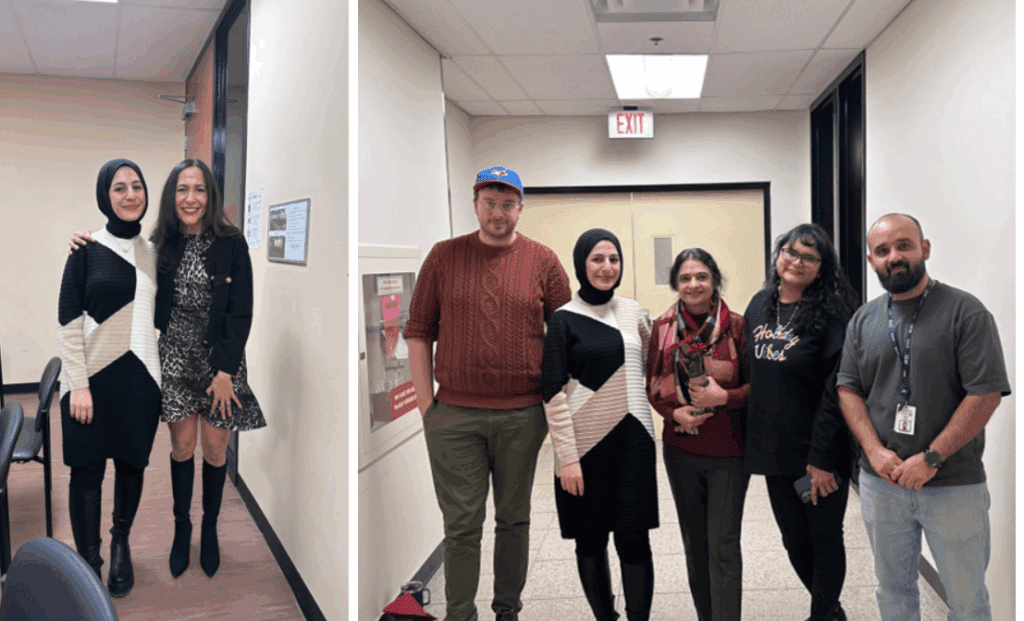
What was a personal highlight of your trip?
The highlight of my trip was witnessing clinicians and scientists gather to work together to bring the solution to the clinics and solve the glioblastoma dogma. It redefined my view of what impactful science looks like. Thanks to Dr. Sheila Singh for organising these meetings: Translational Neuro-Oncology Meeting (frequent meetings) & Glioblastoma Canada meeting (a monthly meeting) & Neuroscience day (an annual meeting).
Was there anything you particularly liked about the host institution?
A larger lab works like a beehive in the labs, as well as in an open office style with over 30 researchers, creating a fun and more productive atmosphere. Also, this is my first time using transportation to reach my workplace, since all my previous experiences in Europe, I lived within walking/biking distance of the workplace.
Did you have a personal mentor or anyone who particularly helped you?
The personal mentor was Dr. Chitra Venugopal, who could help me to draw my staying experiments, collaborators, find the instruments and devices to use, and connected me with the other lab members: Dillon, Vassim, and Sumayyah.
How has the trip inspired you in your research?
I have encountered many inspirational people and ideas. Dr. Sheila Singh is an inspiring female leader in both science and neurosurgery. She could balance her medical practice, lead her research group, and hold other leadership positions, all while staying on top of everything. I am so touched by her modesty, soft approaches, tricky questions, smart ideas, and all come with a smile.
Have you brought back any specific knowledge or technique that has benefited your home lab?
I am transferring the knowledge from in vivo work to my lab, as well as establishing a collaboration with Dr. Singh’s lab to finish this study.
How has this visit been beneficial to your research and your career?
This trip has allowed me to observe a different area of ongoing research in the same field as I am focusing on “glioblastoma therapies”. I found that those who have been exposed to translational science working with patient samples and having access to more proper preclinical in vivo models, have better insights into directing the research towards translational science. Now, I have a clearer vision for my future research career than before this internship.
Want to find out more?

If you are interested in applying for the Travel Fellowship scheme, please click here for more information: EACR Travel Fellowships