

EACR Travel Fellowships are co-sponsored by Worldwide Cancer Research and provide funds up to €3,000 to early-career cancer researchers. For more information on how to apply for Travel Fellowships, you can visit the EACR website.
Home Institution: Institute of Molecular Genetics and Genetic Engineering, University of Belgrade, Belgrade, Serbia
Host Institution: Institute for Research in Biomedicine (IRB Barcelona), Barcelona, Spain
Dates of visit: 23 October 2017 – 22 December 2017
My PhD project investigates the roles of three microRNAs (miRNAs) that regulate at least two members of TGFβ signalling pathway with altered expression demonstrated in colorectal cancer (CRC): hsa-miR-17-5p, hsa-miR-21-5p and hsa-miR-93-5p. The aim of this research is to elucidate the role of selected miRNAs in response to chemotherapeutics used for treatment of metastatic CRC and to test their translational potential as predictive biomarkers. To conduct the first part of this project, I needed help and the expertise of the Growth control and cancer metastasis group led by Dr. Roger Gomis.
In order to investigate the role of chemotherapeutic drugs in controlling the expression levels of selected miRNAs, three colorectal cancer cell lines were treated with single or combined standard chemotherapeutical agents (5-FU, oxaliplatin and irinotecan). qRT-PCR analysis was used to quantify selected miRNA expression levels after the treatment. Levels of apoptosis upon the treatment were measured by flow cytometry, while protein extracts were used to measure pro-apoptotic and anti-apoptotic protein levels by Western blot analysis. To study the role of selected miRNAs in response to standard chemotherapeutics, it was necessary to overexpress and/or inhibit the expression of these miRNAs. Before the start of the Travel Fellowship; miRNA lentiviral constructs for overexpression and downregulation for one of the selected miRNAs (miR-21-5p) were prepared by cloning. During this study visit at IRB Barcelona, I generated stable colorectal cancer cell lines for miR-21-5p downregulation and overexpression using lentiviral infection of tumour cell lines.
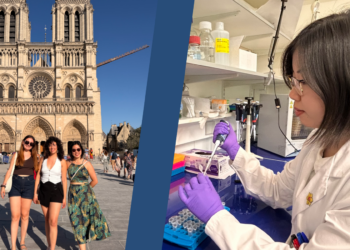
The two months I spent at the IRB Barcelona was the best thing that could ever happen to me at the beginning of my PhD! I am excited to have preliminary results from chemotherapeutical treatments and proud to have generated stable cell lines for miR-21-5p overexpression/downregulation. During this research visit I gained skills and experience in apoptosis research, improved my cell culture techniques and I am thrilled to transfer this knowledge to my home laboratory, especially knowledge regarding production, handling, and storage of lentiviruses. I also had a chance to participate in scientific lab meetings, a place where you discuss your work and receive unbiased, great feedback from the group members on how to overcome a burning problem, or suggestions what to do next.
I am grateful to all the members of Dr. Roger Gomis’ team for warmly welcoming me and for all of their help. It was a real pleasure to experience such a highly motivating and amazing working atmosphere. I also enjoyed being surrounded by these inspiring and amazing researchers during two PhD cool-off parties organised by IRB Barcelona and having a chance to get to know them better and talk about their research, as well as to experience their lab Christmas dinner tradition. I would like to thank Dr. Roger Gomis for inviting me to work in his laboratory and letting me know that I can always come back to his lab, and especially Dr. Jelena Urosevic for her generous support and supervision during my stay. A special thanks goes to the EACR organisation: your financial support is greatly appreciated and I am truly honoured to have received an EACR Travel Fellowship.
Visiting Barcelona was a unique and unforgettable experience. Although my stay was marked with a Catalan political crisis, I still had wonderful time exploring the Sagrada Familia Church, Park Guell, Montjuic Castle, Tibidabo hill, the Botanical Gardens, Barceloneta beach and numerous museums and art galleries. Besides all the famous touristic attractions and charming architecture, Barcelona is also a city of dance, bicycles, football and delicious food.