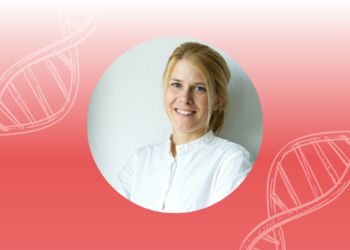
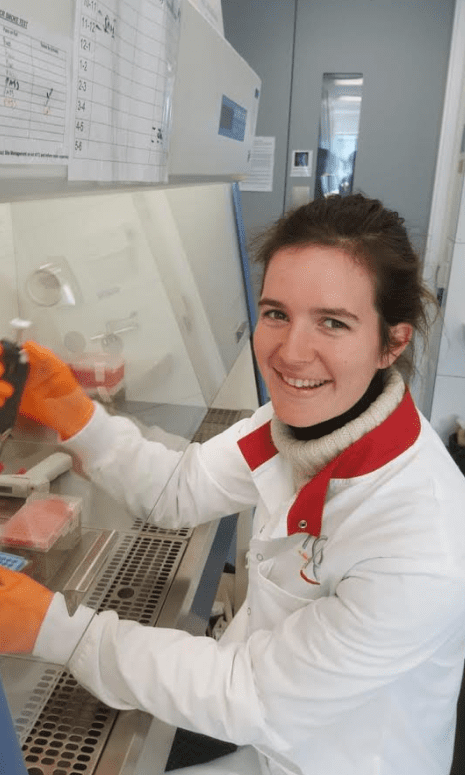
Wet lab scientist Beshara Sheehan explains the work she does with prostate cancer biomarkers, and the activities she takes part in to help keep her pushing forwards in her PhD.

24 September is World Cancer Research Day, which raises awareness of the important and lifesaving work done by researchers. As part of this the EACR asked a variety of members to share a day in their life as a cancer researcher.
Name: Beshara Sheehan
Nationality: Australian
Place of work: Institute of Cancer Research, UK
Job title: PhD student
How long have you worked there: 2 years

I am based at the Sutton site of the Institute of Cancer Research UK, which means I am lucky enough to avoid rush hour of inner city London. Whether that be via biking or taking the train to work. Usually, my day begins by checking my emails in the office and my cell lines in the incubators upstairs in the lab. Our team also have weekly lab meetings, which take around 2 – 3 hours.
As a junior member of the team it’s helpful to follow the development of different projects. Particularly the speed at which they progress depending on their different practical or collaborative elements. It allows me to generate an accurate perspective of what I should and should not expect from myself as a trainee scientist. Finding this perspective can be difficult during your PhD. This is because students at the same stage as you have entirely different projects. Furthermore, different teams often have different expectations of work output.
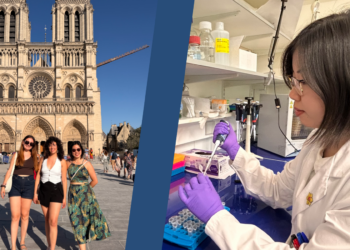
Practically speaking, the majority of my protocols consist of Westerns, qPCR, survival assays, DNA damage analysis assays and bioinformatics analysis. I work in a very collaborative team. This means if I come across a protocol I have never seen or conducted before, someone else probably has tried it and can teach me. This is very helpful for me because I actually studied immunology until my PhD. Hence, I had to master quite a few of the techniques. Thankfully, I was taught these techniques within the first few months of starting!

Laboratory work towards my project follows a cycle like this: Reading and researching the background for aims and hypotheses. Generating a realistic protocol. Optimising said protocol. Evaluating the results and hoping to see something exciting. Repeating and hoping to see consistency. Although this process is the majority of a PhD, it’s pretty fraught with disappointing results and frustration. Certainly the most difficult challenge is picking yourself back up and trying again or something new. This challenge is tempered by excellent supervisors and supportive colleagues. Despite this being the cliché work environment, once you become a part of it, you understand why teams aim to manifest it.
It is also very encouraging to know that your work could eventually help patients. I am particularly lucky because our team consists of both basic scientists and medical doctors. This helps to provide different perspectives to data analysis. It also tightens the links you feel as a researcher towards the overall goal: helping patients survive.

Research can be a bit of an emotional rollercoaster sometimes. I have found it very helpful to take time away from the workspace. We have a gym available on site and a volunteer run bar that I work at on a Thursday or Friday evening. I also take part in the bar committee of. A cross-site student association also organises many events held in London. They also organise an annual Student Away Weekend to get a bit further afield from the campus. Originally, I am from Australia and I appreciate the proximity to mainland Europe. I travel as much as I can during my annual leave or weekends. I have certainly found that if I am struggling to disconnect from the lab, then creating some physical distance in between helps! And with a bit of disconnect comes a refreshing excitement to keep pushing the PhD forwards.
How can you get involved with World Cancer Research Day?
1. Sign the World Declaration for Cancer Research
2. On 24 September share a snapshot on social media from a day in your life as a cancer researcher: use #WorldCancerResearchDay
Click here to see more posts about a ‘Day in the Life’ of other cancer researchers.
About Beshara’s PhD project:
My PhD project is focused on a protein that is present at high levels on prostate cancer cells, also known as a prostate cancer biomarker. The majority of my time is spent trying to develop experiments that may help me understand how the biomarker is benefiting the survival or functioning of the cancer cell. This requires a lot of reading and researching from my desk. I am a “wet lab” scientist. Therefore, once I have defined the experiment I spend the rest of my time conducting them in the laboratory. I then use the results from the experiments to strengthen my hypotheses and repeat the process.