
According to the Women in Red, “a gender-gap bridging project on Wikipedia”, there are 1.5 million English biographies on Wikipedia. Less than 20% of these biographies are about women.
 The woman changing that
 The woman changing that
“I’m really excited and inspired by people’s enthusiasm”
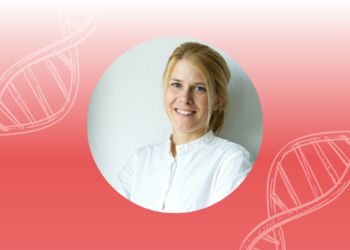
British physicist, Dr. Jessica Wade, wants to change this statistic. US climate scientist Kim Cobb became the first of 670 entries onto Wikipedia by Dr. Wade. All 670 biographies are about female and/or minority scientists. Recently, she told Maya Salam in a New York Times interview that Wikipedia is important because its content “can change [people’s] perception about who they think does science and what they think science is”.
Dr. Wade’s work hasn’t gone unnoticed. In late 2018, she was named in Nature’s 10 for being “a diversity champion”. In Nature’s 10, Lenna Cumberbatch says “she’s redressing an imbalance that’s existed for aeons”. A British Empire Medal “for services to Gender Diversity in Science” followed in 2019.
Why Wikipedia is important
There are challenges, but if we work closely together, we can overcome them.
“In general, most people think making the internet better — particularly the content people see and use in education — is a good thing. I’m really excited and inspired by people’s enthusiasm.”
“We don’t make as many encyclopedia books anymore, or as many textbooks. Wikipedia is really the only peer-reviewed, crowdsourced, democratized access to information for every single person in the world to be able to read and contribute to.”
Every person is a journey
Our science can only benefit the whole of society if it’s done by the whole of society. And that’s not currently the case.
Dr. Wade describes the process of “stitching together a biography” as a journey. She is constantly searching for people, often scientists who have won an award or recently published a great paper. She works hard in her research to ensure that each biography contains as much detail about their career as possible.
Dr. Wade also has to ensure that every person meets Wikipedia’s notability criteria of ‘importance’. This criteria has seen 6 biographies removed from Wikipedia as they haven’t been deemed ‘important’. However, as Wade points out, obscure sports players and forgotten pop songs pass this criteria.
It cannot be done alone
What Jessica has done is nothing short of inspirational, but there is still a way to go until this figure of below 20% is raised to an acceptable level. Thankfully, she isn’t alone. She has led and taken part in Wikipedia “editathons” all around the world, and contacted local Wikipedia chapters to encourage biographies in other languages.